
Red Tiger F7N Touch Dash Cam Review: What Shocked Me
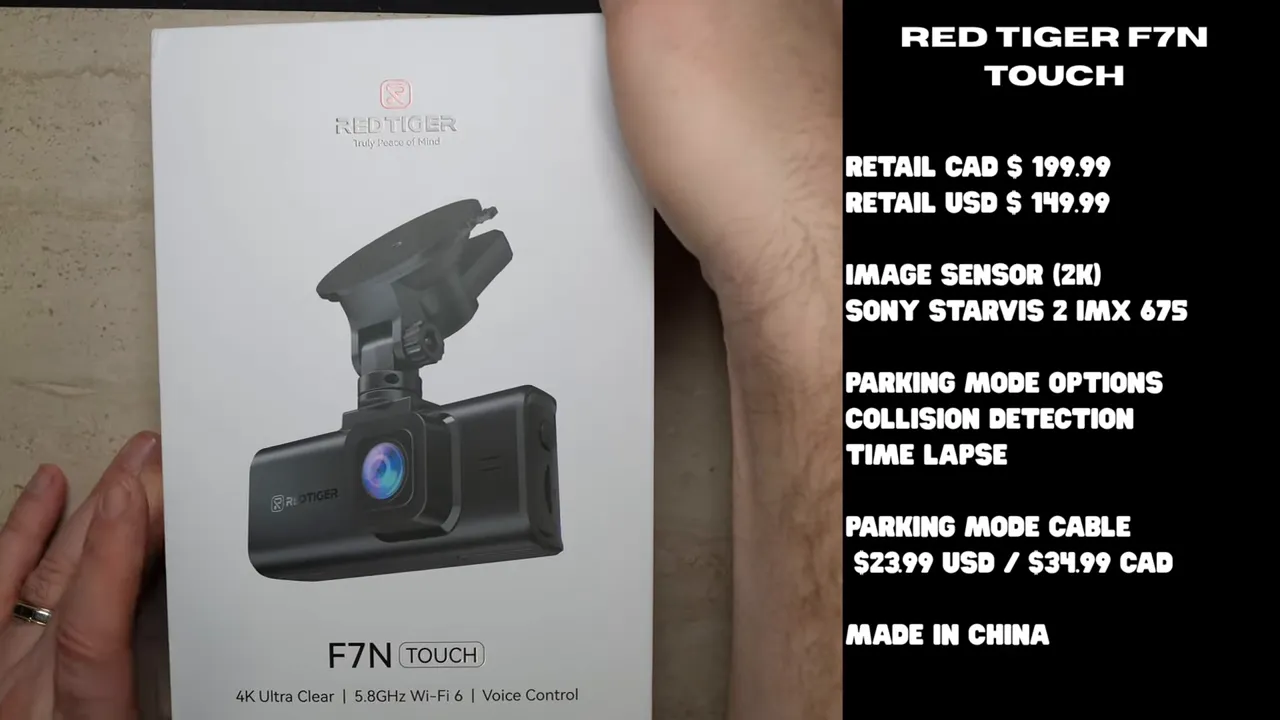
The Red Tiger F7N Touch sells for roughly $149 USD or $199 CAD, and on the surface it looks like it checks a lot of boxes: touchscreen operation, a claimed 4K camera, app connectivity, and parking mode. But when you start testing the details that actually matter, such as license plate clarity, mount stability, app privacy, battery protection, and parking mode response time, the picture changes.
I tested the Red Tiger F7N Touch in daylight, direct sunlight, nighttime driving, and parking mode. I also inspected the mount and compared its behavior against other dash cam designs. Here is what stood out.
The Big 4K Claim Problem
The F7N Touch is advertised as using a 4K image sensor. However, the camera uses the Sony STARVIS 2 IMX675 sensor, which is a 2K sensor, not the IMX678 sensor commonly used in true 4K dash cameras.
That distinction matters. A camera may output a higher resolution video file, but that does not mean it captures native 4K detail. If the goal is to capture critical evidence, especially license plates on moving traffic, sensor capability matters far more than a big 4K label on a listing.
This is exactly why it is important to look past marketing language and focus on the sensor, lens, mounting system, bitrate, and real footage. Our guide on choosing a dash cam based on sensors, HDR, and parking mode breaks down what to look for beyond the resolution number.
Daytime Footage: Decent Image, Weak Moving Plate Capture
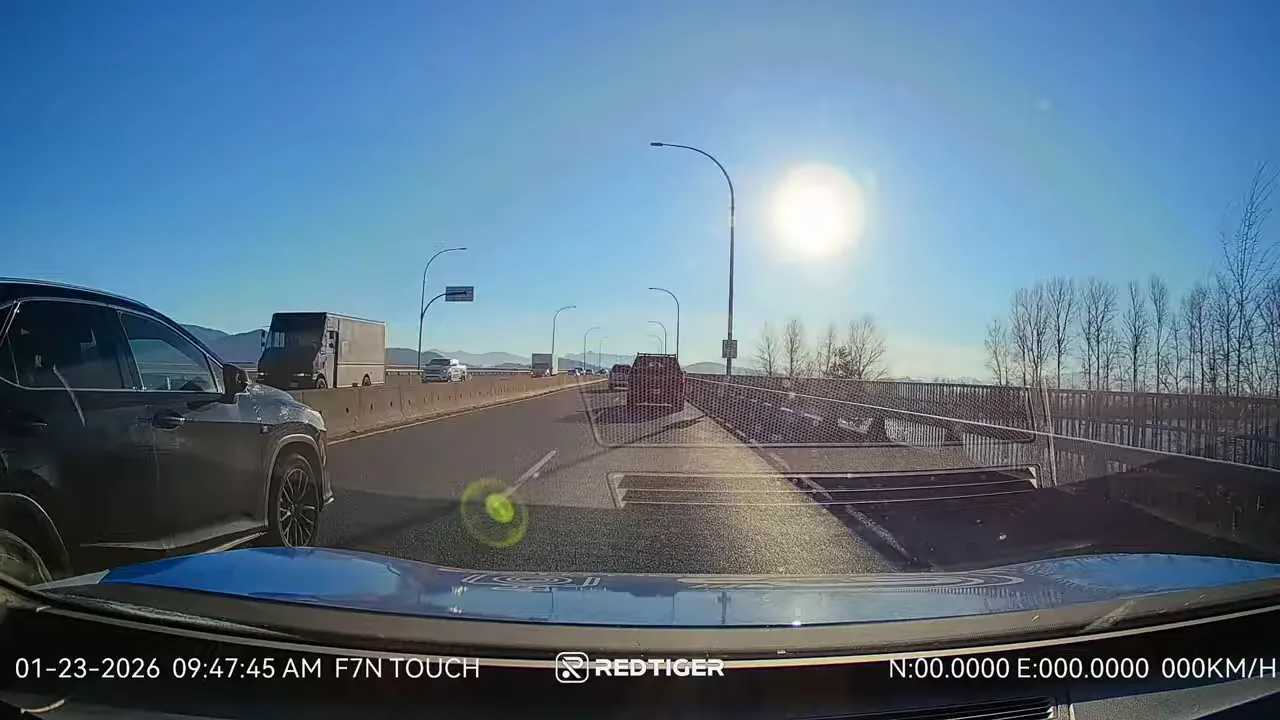
In normal daytime driving, the F7N Touch produces a usable image. The overall scene is visible, colors are acceptable, and road details are generally easy to make out. But the real test is not whether the road looks nice on a sunny day. The real test is whether the footage captures the information needed after an incident.
Oncoming traffic was the weak point. Many vehicles passing in the opposite direction had unreadable license plates because of motion blur. This was disappointing considering the IMX675 is a newer sensor and should be capable of better results than what I was seeing.
The camera does handle driving directly into the sun noticeably better than some earlier Red Tiger models and some lower grade cameras. It was also a major improvement over the Botslab footage in the same conditions, where the image fell apart much more severely in direct sunlight.
Still, glare and windshield reflections remain an issue. A dash cam with a polarized lens, such as the VIOFO A229 Pro, Viofo A329S and Vueroid S1, can better control windshield glare and reflections when driving toward a low sun.
The Red Tiger App Raises Privacy Questions
The Red Tiger app requires an email address and account creation. That alone is not necessarily a deal breaker, but it is worth questioning when other dash cam apps allow local connection and file access without requiring an account.
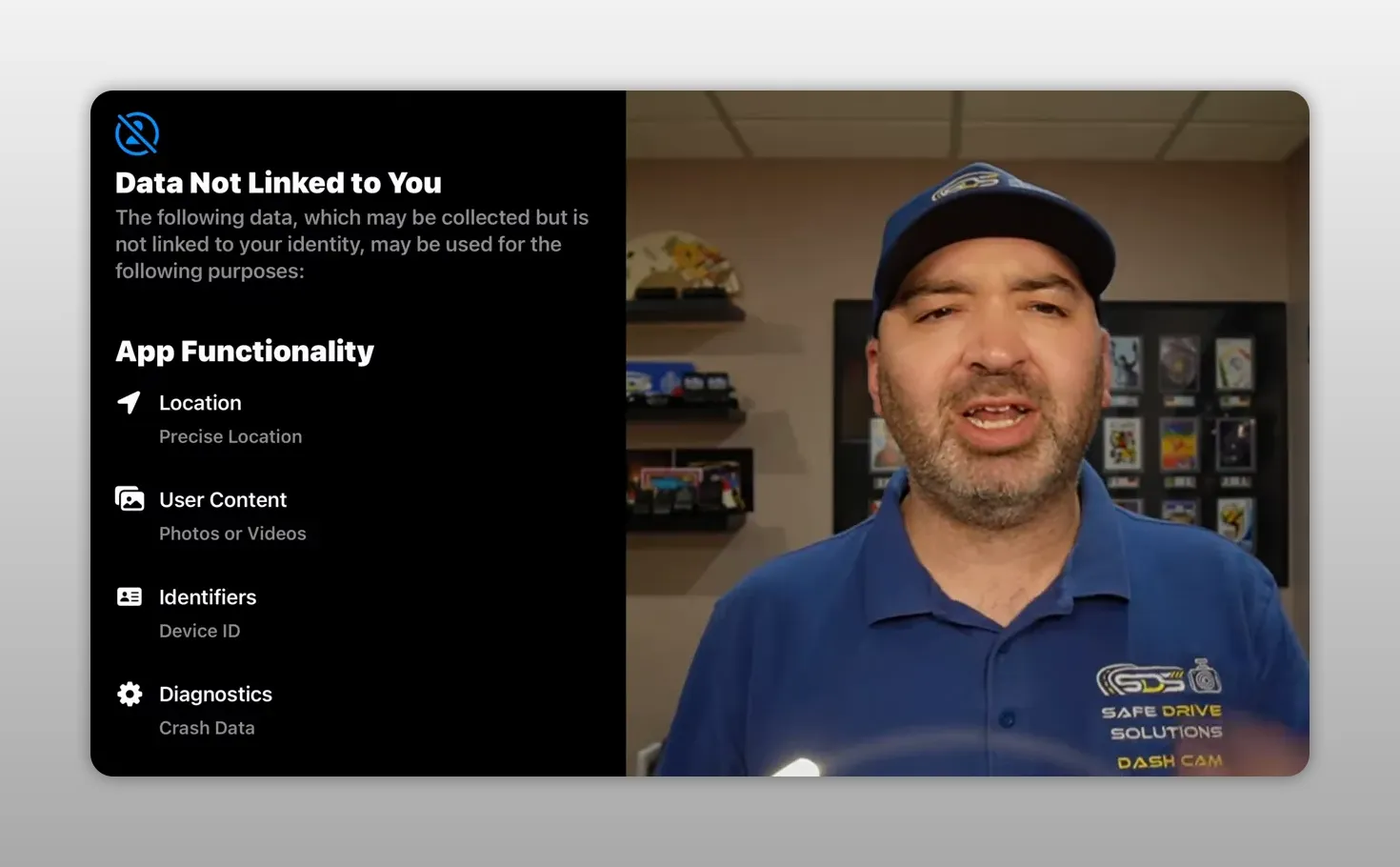
The App Store privacy information for the Red Tiger app lists data linked to the user, including:
- Location data
- User content
- Identifiers
- Diagnostics
For a dash cam, user content can be a serious privacy consideration. Dash cam recordings may contain location details, conversations inside the vehicle, other people, homes, license plates, and footage captured after an accident. It is reasonable to ask why an app needs access to that information after files have been downloaded.
By comparison, the VIOFO app privacy information indicated that no data is collected. Red Tiger should seriously reconsider this approach and move toward a privacy policy that collects as little personal data as possible.
Night Footage Is Improved, but Plates Are Still a Problem
Night performance is better than Red Tiger's earlier generation. The F7N Touch does not become excessively blurry under headlights the way some lower grade dash cams can, and the new IMX675 sensor does show an improvement in low light.
However, improved does not mean great. Signs were still somewhat blurry, and license plates on vehicles ahead were usually unreadable at normal traffic speeds around 50 to 60 km/h. Plate detail was much more likely to be captured only when traffic was moving slowly.
For basic driving footage, the night image is acceptable. For someone buying a dash cam specifically to capture as much critical evidence as possible, including plates in motion after a collision or hit and run, it is not where it needs to be.
The Mount Is the Biggest Hardware Issue
The mount is where I think much of the camera's motion blur and image stability problem begins.
The Red Tiger mount can swivel side to side, and I could not find a way to properly tighten that movement. There are small screw holes on the side, but attempting to tighten the mechanism did not stop the looseness. When a vehicle travels over normal bumps, that side to side movement can transfer directly into the camera footage.
This is a strange design choice because Red Tiger had a better mount design a couple of years ago. The current mount allows unnecessary movement where the camera should be locked firmly in place.
Compare that with a Vueroid or VIOFO windshield mount. Those designs lock the camera into place and allow controlled up and down adjustment for aiming. The camera does not freely wobble side to side.
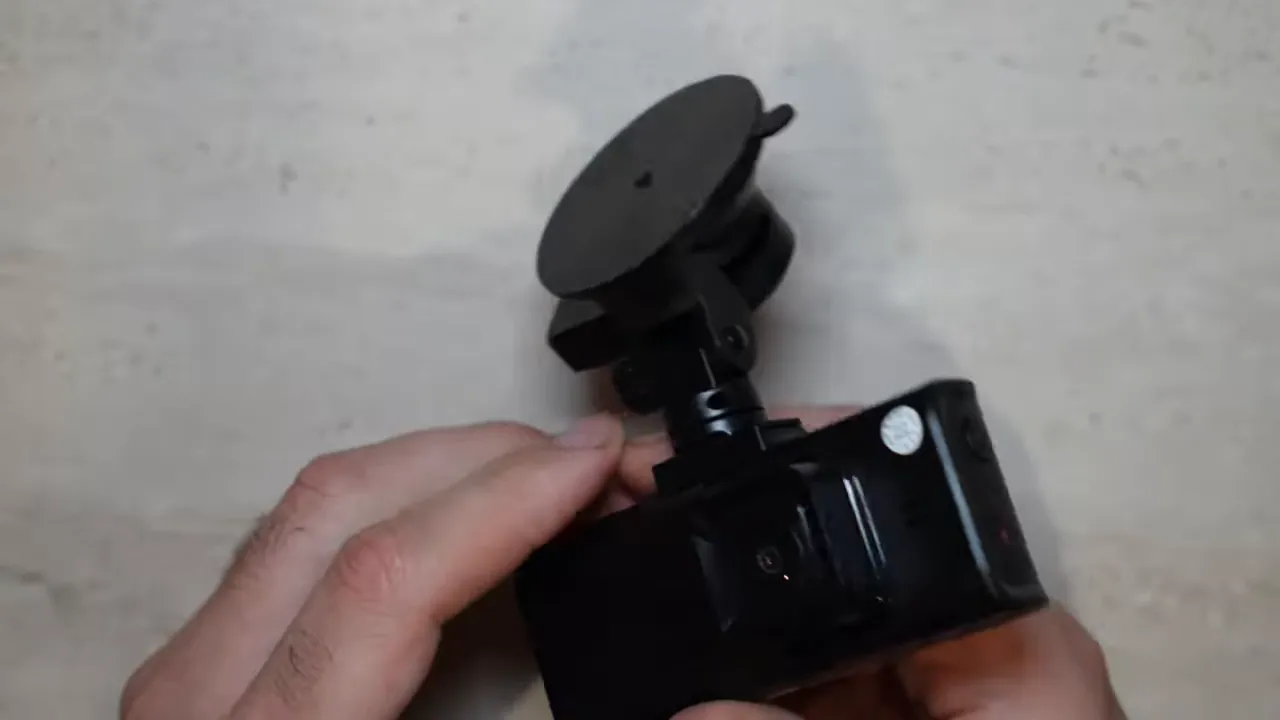
The F7N Touch can be tightened for vertical adjustment, but that does not solve the lateral movement. Until the mount is redesigned, it remains a meaningful concern for anyone prioritizing stable footage.
Parking Mode Requires a Separate Hardwire Cable
The Red Tiger F7N Touch offers collision detection and time lapse parking mode. To use parking mode, you need to purchase a separate hardwire cable, priced around $23.99 USD or $34.99 CAD.
The cable has three connections:
- Constant power
- Ground
- Ignition power
Hardwiring the camera does not automatically mean parking mode is active. Once installed, parking mode still needs to be turned on in the settings. If parking protection is important, make sure you understand both the wiring and the settings before assuming the camera is recording while the vehicle is parked.
Battery Protection Options Are Limited
The common Red Tiger parking cable has an 11.8V cutoff. I do not recommend relying on cutoff settings below 12V for a typical vehicle battery.
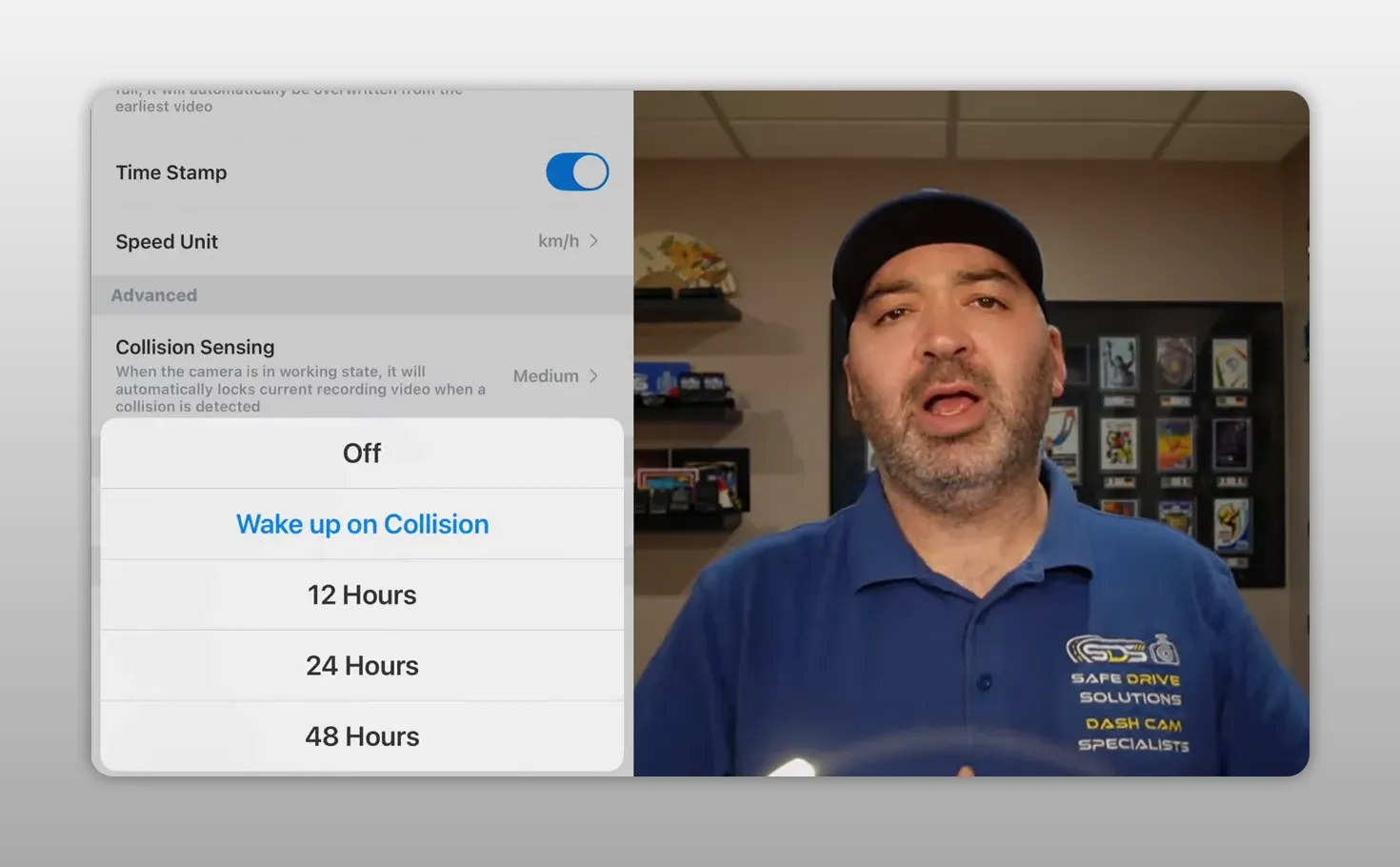
Red Tiger does offer a newer cable with 11.6V, 12V, and 12.4V cutoff settings, which is an improvement. But the timer options are still only 12, 24, and 48 hours. Personally, I prefer having much shorter options, ideally three hours or less, so a driver can limit battery draw based on how and where the vehicle is parked.
The voltage options are also a concern for newer EVs and hybrid vehicles that use lithium batteries and may operate around 13V or 14V. A 12V or 12.4V cutoff is not appropriate protection for those systems and could leave the battery at an unhealthy level. I would not recommend using this camera's parking mode on a hybrid or EV based on these limitations.
Impact detection uses minimal current compared with continuous recording, but battery protection settings still matter. If battery drain is one of your concerns, see our explanation of dash cam battery drain and low battery protection.
Impact Detection Was Too Slow
Parking mode marketing often says a dash cam will wake up when the vehicle is hit. What companies often do not advertise is how long it takes for the camera to wake up after the impact.
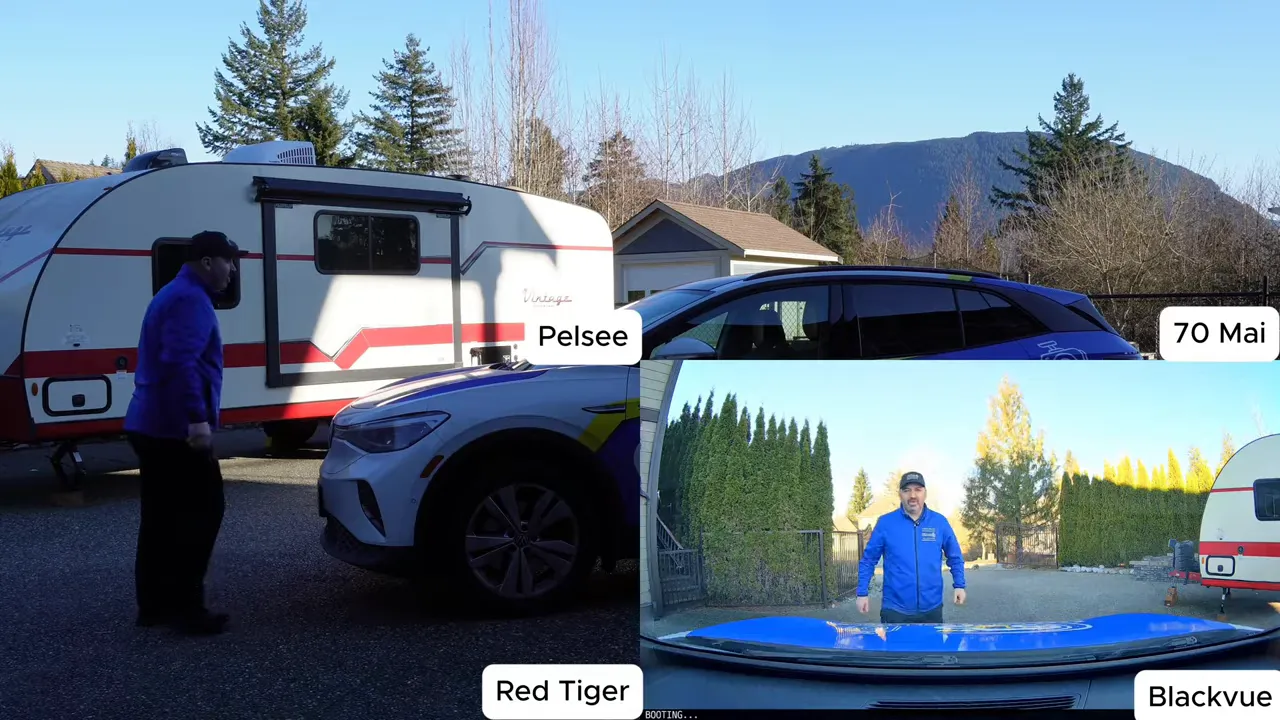
That response time can make a huge difference. If someone hits the vehicle and immediately drives away, a camera that takes 10 seconds to begin recording may miss the vehicle, the plate, and the person responsible.
In the impact tests, the Red Tiger F7N Touch took:
- 13 seconds to wake up after the first test
- 11 seconds to wake up after the second test
That is not quick enough for reliable hit and run coverage. Other cameras can wake up in approximately one to two seconds after an impact, which gives a much better chance of capturing useful evidence.
Time Lapse Is Not Flexible Enough
The F7N Touch offers time lapse parking mode at one frame per second. That is a very limited option if you are trying to capture useful activity around a parked vehicle.
A stronger parking mode system should provide flexibility based on the situation. For comparison, VIOFO offers multiple time lapse rates, including one, two, three, five, and 10 frames per second, along with low bitrate recording, motion detection, and impact detection on certain models.
Those options allow the dash cam owner to choose a balance between battery use, storage consumption, and the amount of detail needed while parked. One frame per second does not provide much flexibility, and it can miss important moments between frames.
Final Verdict: Who Is the Red Tiger F7N Touch For?
The Red Tiger F7N Touch can work as a basic dash camera for everyday driving. If you simply want general road footage and are not expecting to capture every critical detail, it is a reasonable option.
But it is not the right dash cam for someone who wants:
- A true 4K dash camera
- Strong moving license plate capture
- A rigid, stable mount
- Privacy focused app access without account concerns
- Fast impact detection while parked
- Flexible parking mode options
- Appropriate low battery protection for a hybrid or EV
Red Tiger has made improvements in direct sunlight and nighttime footage compared with previous models. The IMX675 sensor is an improvement over earlier hardware, but the results are still held back by the loose mount and weak parking mode system.
The company needs to improve the mount, provide better voltage cutoff and timer options, and dramatically reduce impact detection wake-up time. Those are not minor extras. They are the details that determine whether a dash cam captures evidence when it matters most.
Choose Based on Your Actual Lifestyle
Do not buy a dash cam purely because it has a high rating or because a listing says 4K. Test the claims, look for real footage, check dash cam forums, and pay attention to what actual users and installers are finding over time.
Also think through what matters most for your own vehicle. If you mainly drive during the day, basic recording may be enough. If you street park, live in an area with frequent hit and runs, drive at night, own a hybrid or EV, or need plates captured in difficult conditions, then parking mode, sensor performance, mount stability, and wake-up speed become much more important.
If you are looking for professional dash camera installation in Vancouver or Toronto get your free quote now.
The right dash cam is the one that fits your lifestyle and reliably captures the evidence you may need. Have a safe drive.