
Will Hardwiring a Dash Cam Void Your Vehicle Warranty?
You finally bring home the car you have been dreaming about. The paint is perfect, the interior still smells new, and naturally, you start thinking about the first upgrades.
For a lot of people, that first mod is a dash cam. It is practical, responsible, and one of the smartest things you can add for peace of mind. Then the dealership hits you with the line that stops a lot of owners in their tracks:
If you install that, it’s going to void your warranty.
That warning gets thrown around all the time, especially when it comes to dash cam installation, aftermarket accessories, and simple vehicle mods. The problem is, it is usually not true.
The idea that one small modification can wipe out your entire factory warranty is one of the biggest myths in the car world. It scares people into using only dealer parts, only dealer services, and paying dealer prices for everything.
Here is the real answer: hardwiring a dash cam does not automatically void your vehicle warranty.
What matters is whether the modification directly caused the problem you are asking the manufacturer to fix.
The rule dealers do not love explaining
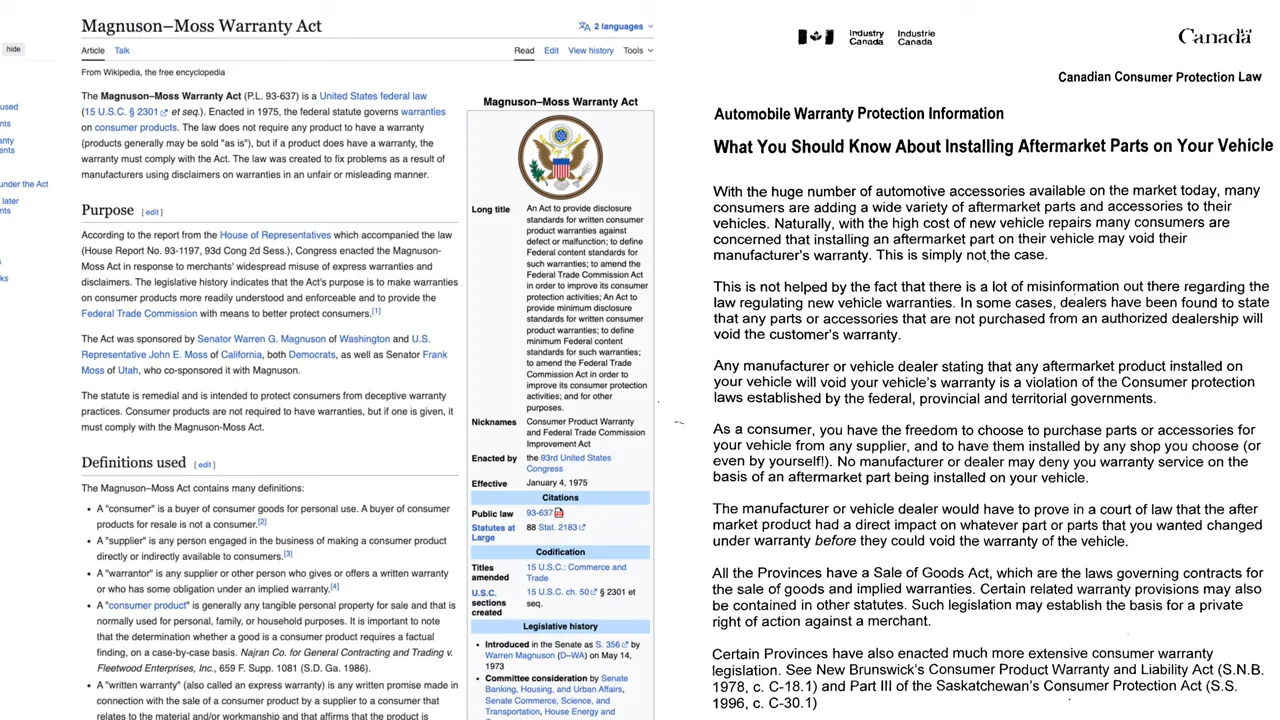
In the United States, the key protection is the Magnuson-Moss Warranty Act. In Canada, Consumer Protection Law serve the same basic purpose by protecting owners from unfair warranty denials tied to aftermarket parts and modifications.
The principle is simple:
- A manufacturer or dealer cannot void your warranty just because you installed an aftermarket part.
- They have to prove that your modification directly caused the failure.
- Even if they deny one specific claim, that does not mean your entire warranty disappears.
This is the part that gets misunderstood, or conveniently ignored, all the time.
If you install a cat-back exhaust, that does not void the warranty on your infotainment screen. If you change your wheels and tires, that does not automatically cancel your engine warranty. If you add a lift kit, they cannot legally deny an unrelated air conditioning repair just because the vehicle has been modified.
The burden of proof is on them, not on you.
Can one mod void your whole warranty?
No. Not legally, not in the blanket way it is often presented.
The most a dealer can generally do is deny coverage for a specific repair if they can show your modification caused that specific failure.
That distinction matters.
So if a poor electrical installation damages an electrical module, they may deny that electrical claim. That still does not mean they get to void your powertrain warranty, your HVAC coverage, or the rest of your factory protection.
If a service advisor throws out a broad statement like, “That will void your warranty,” there are usually only two possibilities:
- They do not actually understand the rules.
- They are hoping you do not understand them either.
The green light mods: low-risk upgrades that usually do not create warranty problems
Some modifications are so low-risk that it is extremely difficult for a dealer to tie them to a major failure. This is where most dash cam setups land when installed properly.
1. Dash cam using the 12V lighter plug
This is about as risk-free as it gets.
You are plugging an accessory into a port designed for accessories. It is no different in principle than plugging in a phone charger. As long as the dash cam does not blow a fuse or create an obvious electrical fault, there is no realistic basis for claiming your warranty is void.
The downsides are practical, not warranty-related:
- Visible dangling wire
- Someone may unplug it to charge a phone
- Parking mode is usually limited or unavailable
2. Dash cam using an OBD2 power adapter
This has become a popular option for warranty-conscious owners.
The OBD2 port has been standard on vehicles since 1996, with a few exceptions. A quality OBD2 adapter can provide the constant power needed for dash cam parking mode without cutting or splicing wires.
Why this setup appeals to so many people:
- It is plug-and-play
- There is no permanent wiring change
- It can usually be removed in seconds before service
- Quality adapters typically use only power and ground pins
That last point is important. A well-designed adapter is not trying to interfere with the car’s computers. It is simply drawing power.
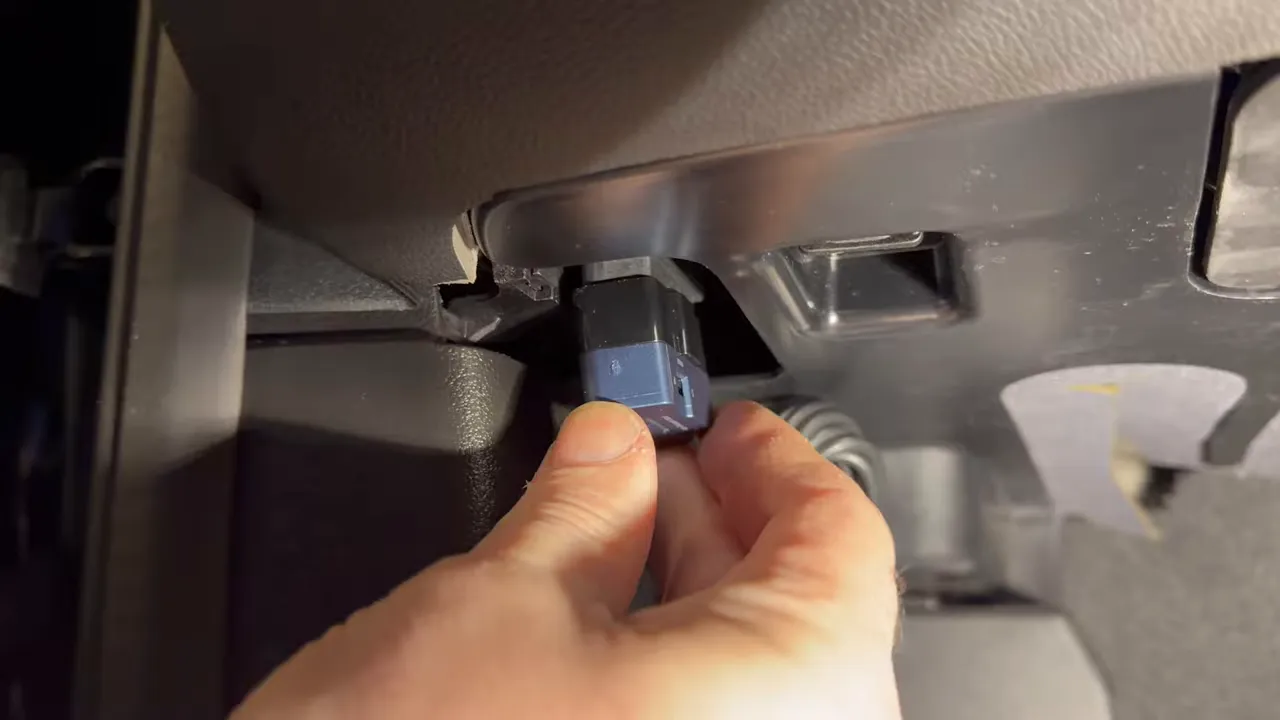
3. Professionally hardwired dash cam installation
This is the cleanest-looking option and the one that tends to scare people most, because it involves the fuse box or dedicated vehicle power points.
Done properly, the risk is still very low.
A reputable shop should be using proper methods, such as fuse taps or approved hardwiring procedures, and selecting suitable power sources based on factory service information. That is a very different situation from someone randomly poking around your fuse box and hoping for the best.
Here is the honest version of the story: if a hardwire installation is done incorrectly and it damages something electrical, a claim related to that damage could be denied. That is fair. But that still does not give anyone the right to void your entire warranty.
The real takeaway is not “never hardwire a dash cam.”
The takeaway is get it installed properly.
Even dealers outsource this work
This is one of those things a lot of people do not realize. In many cases, dealerships do not even handle accessory installations themselves. They send the work to an aftermarket accessory shop, then mark up the price.
So you can end up paying double, sometimes even triple, for essentially the same installation a reputable independent shop could have done.
There is also a common sales line that factory dash cams or dealer-installed dash cams are somehow fundamentally safer because they “plug into factory wiring” without any real modification.
That is not always how it works in practice.
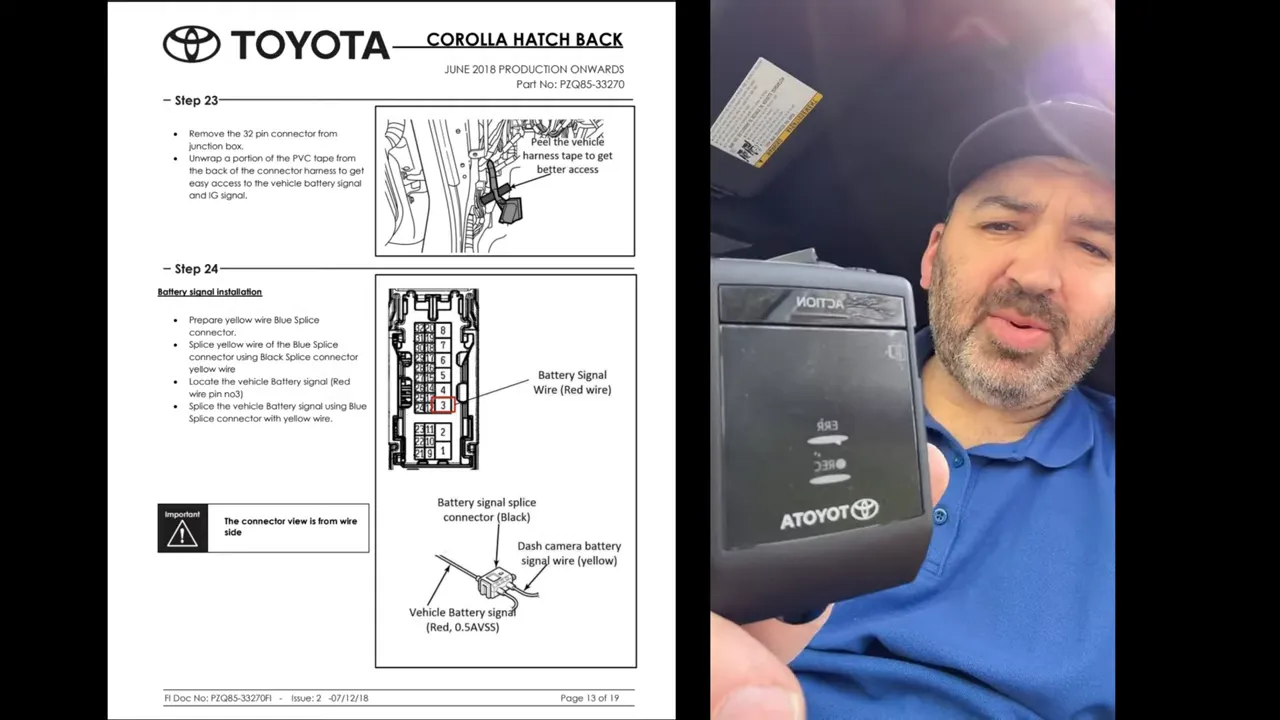
A Toyota example makes that pretty clear. Dealer-installed Toyota dash cams can still involve hardwiring methods rather than some magical no-touch factory connection. In other words, the same basic type of installation an experienced aftermarket shop performs is often being used by the dealer too.
Other green light mods
Beyond dash cams, there are lots of low-risk modifications that generally have very little connection to major warranty claims:
- Spoilers
- Emblems
- Vinyl wraps
- Different grilles
- Upgraded floor mats
- Shifter knobs
- Phone mounts
- Mud flaps
- Skid plates
For these kinds of parts, a dealer usually has almost no legal footing to deny an unrelated warranty repair.
The yellow light mods: not automatic trouble, but be prepared for pushback
This is where enthusiast modifications start getting more interesting. These upgrades still do not automatically void your warranty, but they can create situations where a dealer may try to argue that the modification contributed to a related failure.
Wheels and tires
Wheels and tires are one of the most common mods out there, and they absolutely do not wipe out your powertrain warranty.
But if you choose wheels with a very aggressive offset that changes loads on suspension or hub components, and a wheel bearing fails early, the dealer now has a more plausible argument that your setup contributed to the problem.
They would still need to prove it. The point is that this is no longer a completely unrelated cosmetic change.
Suspension upgrades
Lowering springs, coilovers, and other suspension modifications are another classic yellow light area.
No, they do not void your warranty across the board. Your lowered suspension does not cancel your sunroof coverage. But if a CV joint fails, or an axle boot tears after the geometry has changed, the dealership may try to connect those dots.
That does not mean they automatically win the argument. It does mean you should expect the conversation.
Cat-back exhaust systems
A cat-back exhaust replaces the piping from the catalytic converter back to the tailpipes. It is mostly a sound mod.
Because it sits after the major engine and emissions sensors, it is generally considered a safe modification. It is not meaningfully changing engine operation in the way a tune does.
Still, it is not unusual for an uninformed service advisor to see an aftermarket exhaust and treat it like a convenient scapegoat. If that happens, the practical response is straightforward: explain that the system is located after the key engine controls and does not alter the engine’s operation in a way that would cause the failure being discussed.
The core idea with yellow light mods is this:
The failure has to be related to the modification.
The red light mods: where warranty denial becomes much more likely
Some modifications fundamentally change how the vehicle’s most critical systems operate. When that happens, the odds of a legitimate warranty denial go way up.
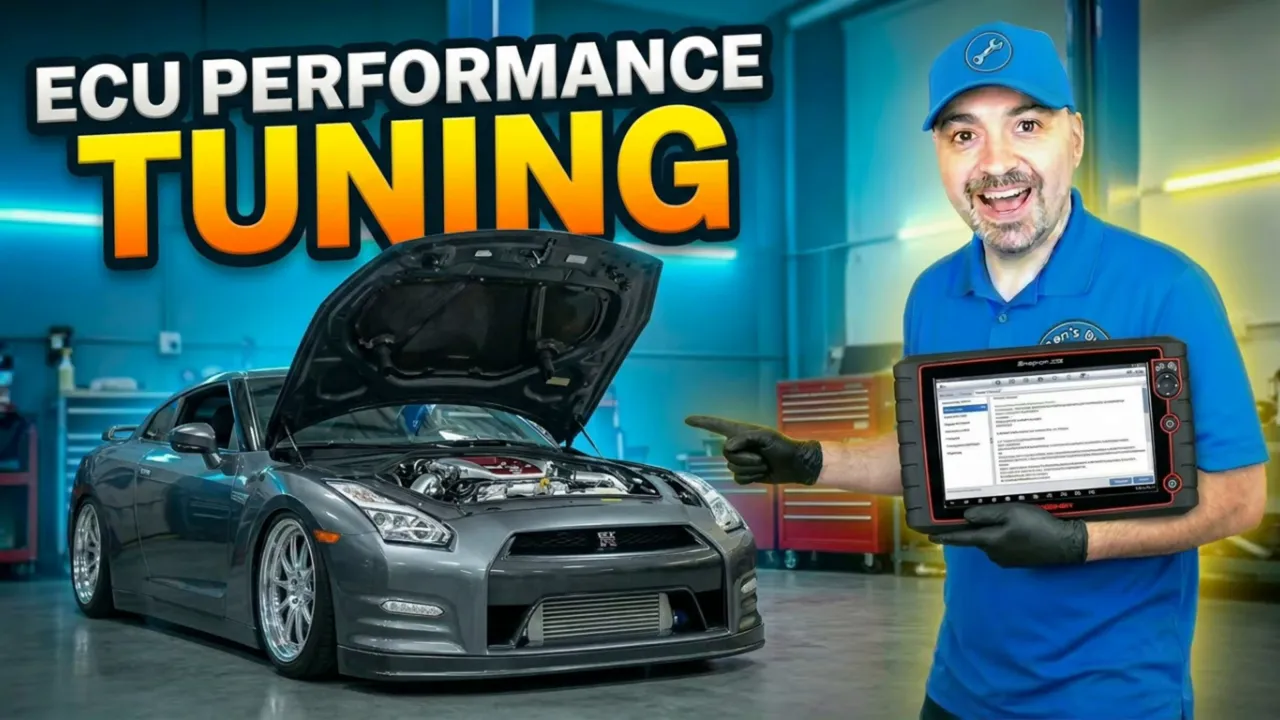
ECU tuning and engine flashing
This is the big one.
Tuning your engine computer means changing the factory software that controls fuel delivery, ignition timing, boost pressure, and other critical operating parameters. If engine or transmission problems show up after a tune, manufacturers can often see that the software has been altered.
At that point, denying a related powertrain claim becomes a much stronger position for them.
Why? Because the vehicle is no longer operating within the parameters it was designed and warranted for.
That is why tuning is best understood as pay-to-play territory. Once you go down that road, you need to be prepared to accept the cost if a major component fails.
What to say if a dealer denies a warranty claim because of a mod
If you run into a problem over a green light or yellow light mod, the best response is not anger. It is calm, informed pressure.
Here is a solid way to handle it.
1. Stay calm
Do not turn it into a shouting match. The stronger position is the one grounded in facts.
2. Ask the key question
Ask this clearly and directly:
Can you please show me in writing how my aftermarket part directly caused this specific failure?
That question forces the issue back to causation, which is exactly where it belongs.
3. Name the law
If you are in the U.S., mention the Magnuson-Moss Warranty Act. In Canada, refer to applicable consumer protection law.
Often, simply making it clear that you understand your rights changes the tone of the conversation very quickly.
4. Escalate if needed
If the service advisor will not budge, move up the chain:
- Service manager
- General manager
- Manufacturer corporate customer service
5. Document everything
Keep records of:
- Phone calls
- Dates and times
- Names of staff
- What was said
- Any written responses
If things get messy, documentation matters.
Why the shop you choose matters just as much as the part you install
When people ask whether a dash cam installation will affect warranty coverage, they are usually focused on the dealer side of the equation.
But there is another part that matters just as much: who is doing the work.
Proper business insurance matters
This is a detail many people miss.
For example, in British Columbia, some businesses may carry an ICBC garage policy. That can cover the vehicle while it is being worked on, but once the keys are handed back, that coverage may no longer apply.
If a wiring issue causes a problem a week later, that limited policy may not help at all.
That is why it matters whether the shop also carries broader insurance that covers completed work after the installation is finished. Even excellent shops can have mistakes happen. Insurance is there for exactly that reason.
Be careful with cash jobs
This is where a lot of people accidentally take on unnecessary risk.
Trying to save the tax on a cash deal might sound tempting, especially for a simple dash cam install, but it creates a serious problem. If there is no proper invoice and no formal transaction record, insurance coverage may not apply if something goes wrong later.
That means the person who did the work might have no obligation, and no coverage, to make things right.
It is a strange contradiction when someone worries about warranty protection, then asks for an undocumented install on a brand-new vehicle. If you care about protecting yourself, paper trails matter.
How to find a reputable aftermarket accessory shop
If you are getting a dash cam hardwired or adding any aftermarket electronics to a newer vehicle, look for a shop with a strong reputation and clear evidence of their work.
Good places to start:
- Google reviews
- Reddit discussions
- Photos of previous installs
- Videos showing workmanship
If your vehicle is very new, the shop may only have examples from the prior model year. That is normal. What you are really looking for is evidence that they understand modern vehicles and consistently do clean, professional installs.
So, will hardwiring a dash cam void your warranty?
For the vast majority of properly installed dash cam systems, no.
A dash cam installed by 12V plug, OBD2 power adapter, or professional hardwiring does not automatically void a vehicle warranty. The same goes for many other common vehicle mods. What matters is whether the modification directly caused the failure behind the warranty claim.
That is the line to remember.
You absolutely have the right to repair and modify your own car. You can install a dash cam, personalize the interior, add cosmetic upgrades, and even make more involved changes without living in fear of a dealership threat that is broader than the law allows.
You just need to be smart about the difference between:
- Low-risk mods that are unlikely to be connected to major failures
- Moderate-risk mods where related parts could become a point of dispute
- High-risk mods like ECU tuning, where denial of related claims becomes much more legitimate
Know your rights. Choose good parts. Use reputable installers. Keep records.
That is how you protect both your car and your warranty.
Need help with dash cam installation?
Safe Drive Solutions provides professional dash cam installation in Greater Vancouver and Greater Toronto, and also supplies dash cameras through its online shop.
For anyone trying to decide between hardwiring, OBD2 power, or a simple plug-in setup, getting the installation done properly is the best way to keep the risk low and the peace of mind high.