
Toyota Corolla Cross Hybrid Vueroid S1 Dash Camera
The 2026 Toyota Corolla Cross Hybrid is a great example of why dash cam choice matters just as much as the installation itself. On a hybrid, I am not only thinking about video quality and clean wiring. I am also thinking about battery draw while the vehicle is parked.
For this install, the right fit was the Vueroid S1 front and rear dash camera. The big reason comes down to power consumption. Hybrids and EVs often have smaller 12V batteries, so the wrong parking mode setup can create problems you do not want.
The Vueroid S1 has an extreme low power mode that can draw about 1 milliamp while parked. That makes it a very practical option when the goal is to protect the vehicle without putting unnecessary strain on the battery.
Why the Vueroid S1 makes sense for a hybrid
When people shop for a dash cam, they usually focus on resolution, app features, or whether they want front and rear coverage. Those things matter, but for a hybrid like the Corolla Cross Hybrid, parked power draw becomes a major factor.
That is why this model stood out. In its extreme low power setting, it uses very little current while the vehicle is off. That can make a big difference if you want some level of parking protection without relying on a more power-hungry recording mode.
If you are comparing options for a hybrid or EV, it helps to understand that not all parking modes behave the same way. Some continuously monitor the surroundings and naturally use more energy. Others go into a sleep-like state and wake only when needed. If you want a deeper breakdown of how this works in electrified vehicles, this guide on dash cameras in electric vehicles and hybrids is worth reading.
What extreme low power mode actually does
This is the part that needs to be understood clearly.
Extreme low power mode is not the same as full-time surveillance. It is not sitting there recording every movement around the vehicle. It is not running like motion detection. It is not operating like time lapse either.
Instead, it stays in a very low consumption state and only wakes up to record when the vehicle experiences an impact.
So the tradeoff is simple:
- Big advantage: extremely low battery draw while parked
- Main limitation: it records impact events, not ongoing activity around the car
That makes this mode ideal for someone who wants a battery-friendly setup first and foremost. If the priority is capturing motion around the vehicle the whole time it is parked, then a different parking mode strategy may be better, but it will generally use more power.
For a closer look at the pros and cons of different parking setups, including motion detection, time lapse, and impact-based modes, see this guide on dash cam parking mode.
Front camera placement in the Corolla Cross Hybrid
Inside the vehicle, the front camera is mounted behind the rearview mirror. That is where most people want it.
The reason is straightforward. A dash cam should do its job without becoming a distraction. By placing it behind the mirror, the camera stays out of the normal line of sight, so the road ahead feels clear and uncluttered from the driver’s seat.
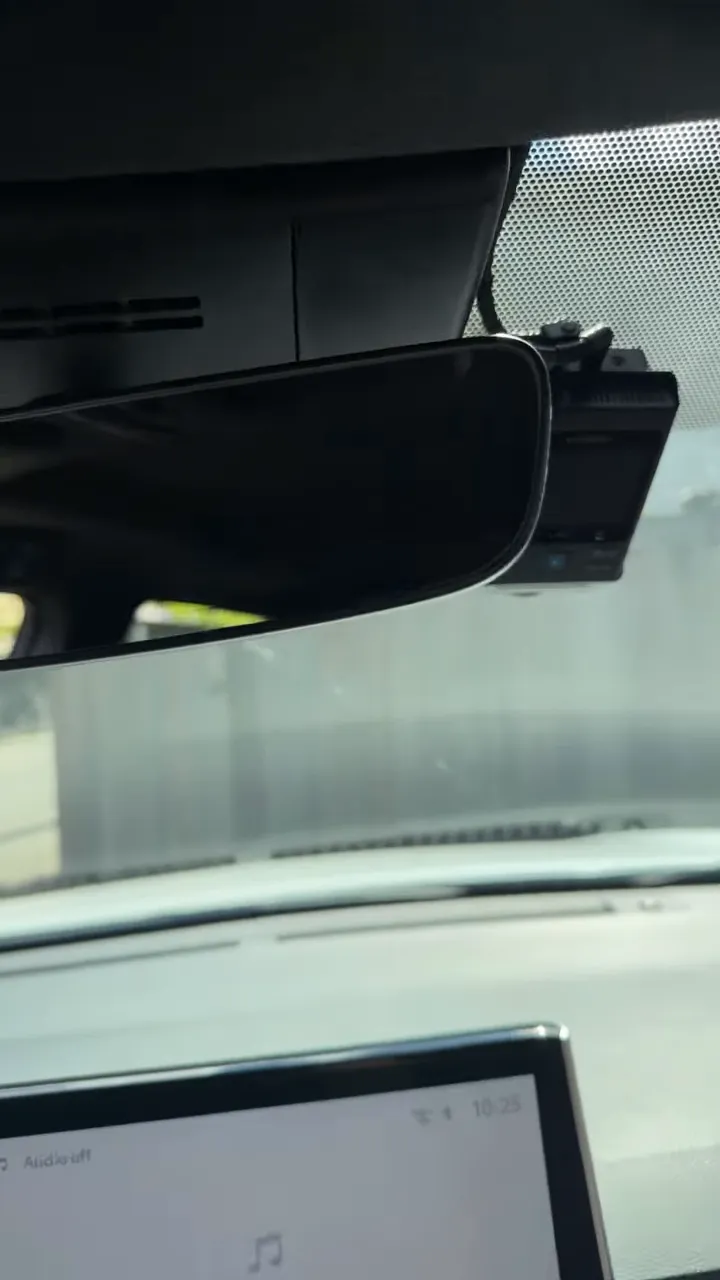
Could it be mounted lower or more directly in front? Sure. Some people prefer that. Placement is always a personal call as long as it is safe, legal, and gives the camera a proper field of view.
But in most cases, the cleanest result is to tuck it high and tight near the mirror. That keeps the setup discreet and preserves visibility.
Clean wiring matters
A proper installation is not just about sticking a camera on glass. The wiring has to disappear into the headliner and trim so there are no loose cables hanging down.
On this Corolla Cross Hybrid, the front camera wiring is tucked up top and hidden away. That gives the cabin a factory-style look and avoids the messy appearance that comes from exposed cables.
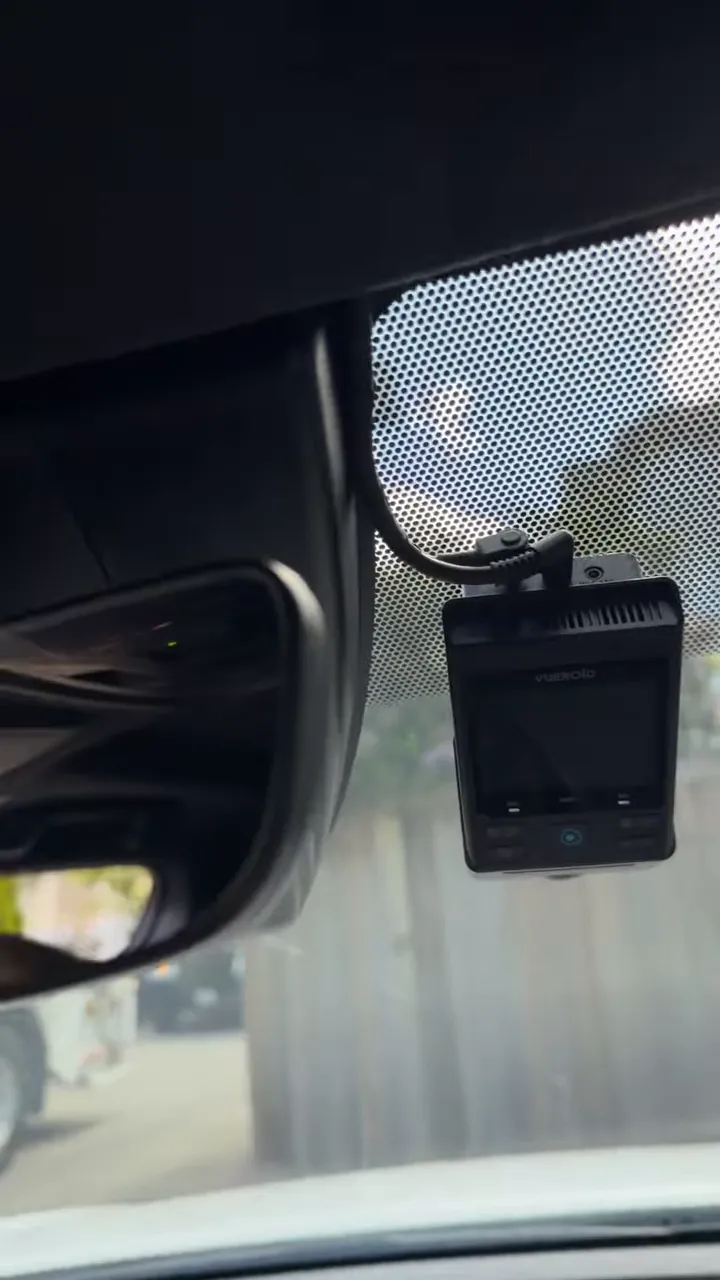
This is also one reason professional installation matters. Clean cable routing is not only nicer to look at, it also helps avoid interference with normal use of the vehicle. If you want to understand why neat routing and correct placement matter so much, this article on professional dash cam installation covers the key reasons.
Rear camera location and adjustability
The rear camera is mounted on the rear hatch glass. That gives it a clear view out the back, and it can be tilted up or down to fine-tune the angle.
That adjustability is important because rear glass shapes vary, and hatchback-style vehicles can have slightly different sight lines depending on trim layout, glass angle, and how much of the interior you want in frame.
With the camera mounted properly, you can dial in the view so it captures useful footage behind the vehicle instead of wasting part of the frame on too much interior or headliner.
Running the rear camera wire the right way
The rear camera cable is routed through the factory grommets rather than left exposed.
That is the right way to do it on a rear hatch. The goal is to make sure the wire is protected, hidden, and not hanging where it could get caught, pulled, or damaged over time as the hatch opens and closes.
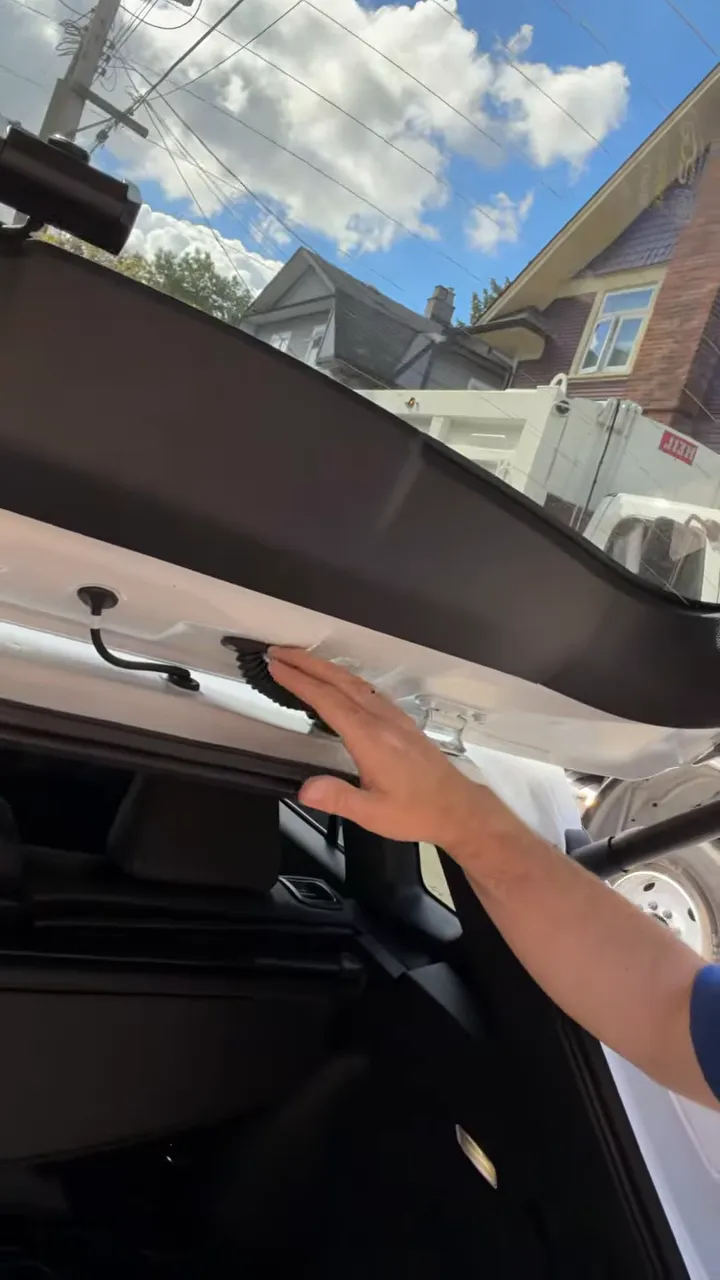
When wiring is passed through the factory path, the finished result looks cleaner and holds up better in daily use. No loose cable loops. No snag points. No shortcut routing that looks fine for a week and then becomes annoying later.
That is especially important on hatchbacks and crossovers where the rear liftgate moves constantly. The installation has to account for that movement from day one.
The real takeaway from this install
The important lesson here is not just that a Vueroid S1 was installed in a 2026 Toyota Corolla Cross Hybrid. It is why this specific setup made sense.
For this vehicle, the winning combination was:
- Low parked power draw that suits a hybrid better
- Impact-based parking protection through extreme low power mode
- Hidden front camera placement behind the rearview mirror
- Adjustable rear camera mounting on the hatch glass
- Factory-style wire routing to keep everything protected and tidy
That is what a good dash cam installation should look like. Not just a camera stuck on the windshield, but a setup that matches the vehicle, the battery limitations, and how the owner actually plans to use parking mode.
Choosing the right setup for your own hybrid or EV
If you drive a hybrid or electric vehicle, it is worth slowing down before picking a dash cam based only on headline specs. The best choice often comes down to how you want the camera to behave while parked and how much power you are comfortable using.
If you want maximum battery efficiency, an ultra low power impact-based mode can be the smart play. If you want more active surveillance, you may need to accept higher power consumption or consider a different power solution.
Either way, matching the dash cam to the vehicle is the key. On this 2026 Toyota Corolla Cross Hybrid, the Vueroid S1 was a strong fit because it delivered front and rear coverage, a discreet install, and a parking mode approach that respects the realities of a hybrid battery setup.