
Toyota CHR 2026 Thinkware U3000 Pro and Dash Camera Battery Pack
The 2026 Toyota C-HR EV is an interesting one because it has a bit of a split personality. Toyota and Subaru clearly had their hands in this vehicle, so some parts feel very Toyota and some details feel very Subaru. That matters when you're installing a dash cam, because little changes in trim, hatch design, and wiring access can make a big difference.
On this build, we fitted a Thinkware U3000 front and rear dash cam along with an IROAD battery pack for extended parking mode. The end result is clean, tucked away, and practical for an EV owner who wants video protection without leaning too hard on the factory 12V battery.
Front camera placement in the 2026 Toyota C-HR EV
Up front, the Thinkware U3000 Pro was mounted on the passenger side near the top of the windshield. That location keeps it out of the driver's normal line of sight, which is exactly what you want. From the driver's seat, it stays discreet. Lean over a little and you can spot it, but during everyday driving it is not sitting there begging for attention.
Clean placement matters just as much as camera quality. A dash cam should do its job without becoming a distraction or making the cabin feel cluttered.
Another big win on this install is that the wiring is fully hidden in the headliner area. No dangling cables, no loose sections around the mirror, and no hack-job look. If you care about keeping a newer EV looking factory, this is the standard to aim for. If you are comparing ways to power and install a camera, our guide on different ways to install a dash cam helps break down the options.
Rear camera mounted on the hatch
At the back, the rear camera is mounted directly on the hatch glass area, giving coverage behind the vehicle while keeping the setup tidy. That rear perspective is a major part of why dual channel systems make sense, especially on newer vehicles where rear-end incidents, parking lot bumps, and hit and runs are all real concerns.
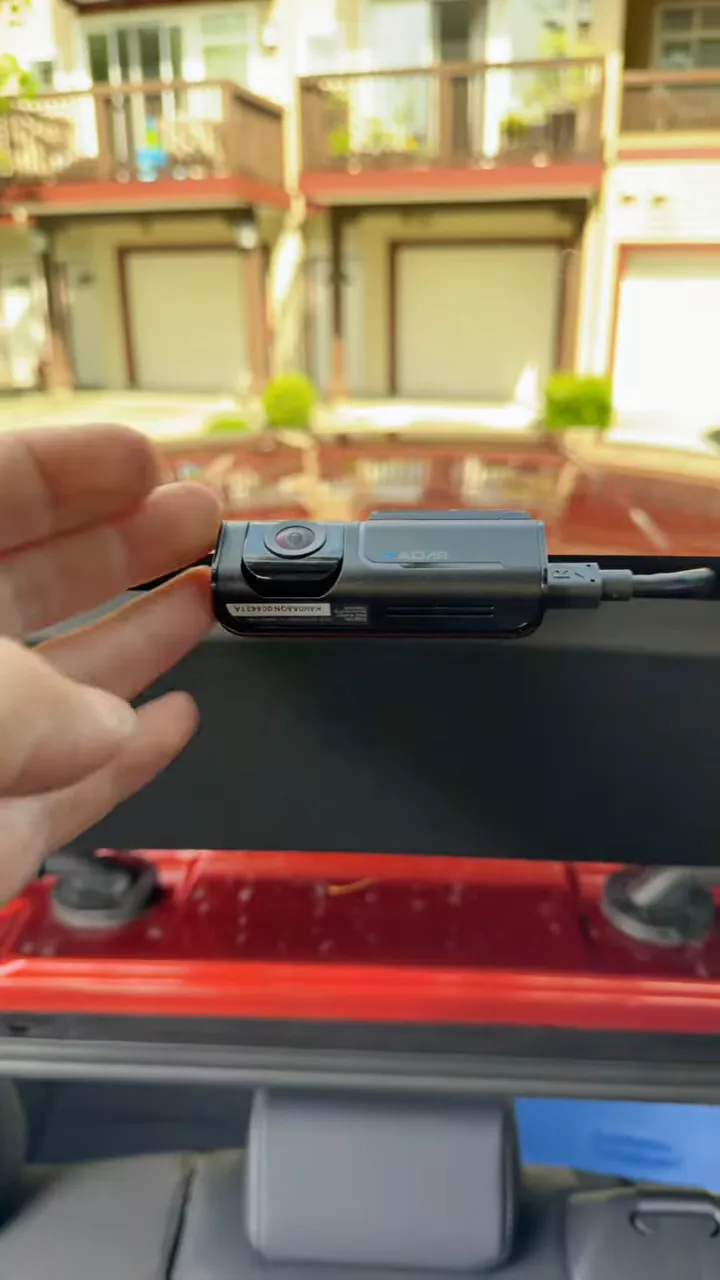
If you're still deciding between a front-only unit and a front-rear setup, it helps to understand how coverage changes with each system. Our article on dash cam channels explains the difference between 1, 2, and 3 channel camera systems.
Why this C-HR EV got a battery pack
This install also includes a dash cam battery pack mounted under the seat. That is an especially smart move on this vehicle.
The idea is simple. The battery pack charges while the car is running, then powers the dash cam while parked. That means you can use parking mode without constantly drawing from the vehicle's own small 12V battery.
For EVs and hybrids, this can be a much better long-term approach when parking mode is a priority. The dash cam still protects the vehicle when it's sitting, but the car's battery is not carrying the whole load.
If parking surveillance is important to you, this is exactly why people look at external power options. We cover the basics in more detail here: how dash cams record while parked.
The small factory battery is the real reason to be careful
Under the hood, this Toyota C-HR EV has a very small 12V battery. That is the key reason an external battery pack makes so much sense here.
On this vehicle, the battery is rated at only 286 cold cranking amps or 45Ah. That is not a lot of reserve if the goal is to run extended parking mode from the car battery itself. On top of that, replacement cost is not likely to be cheap.
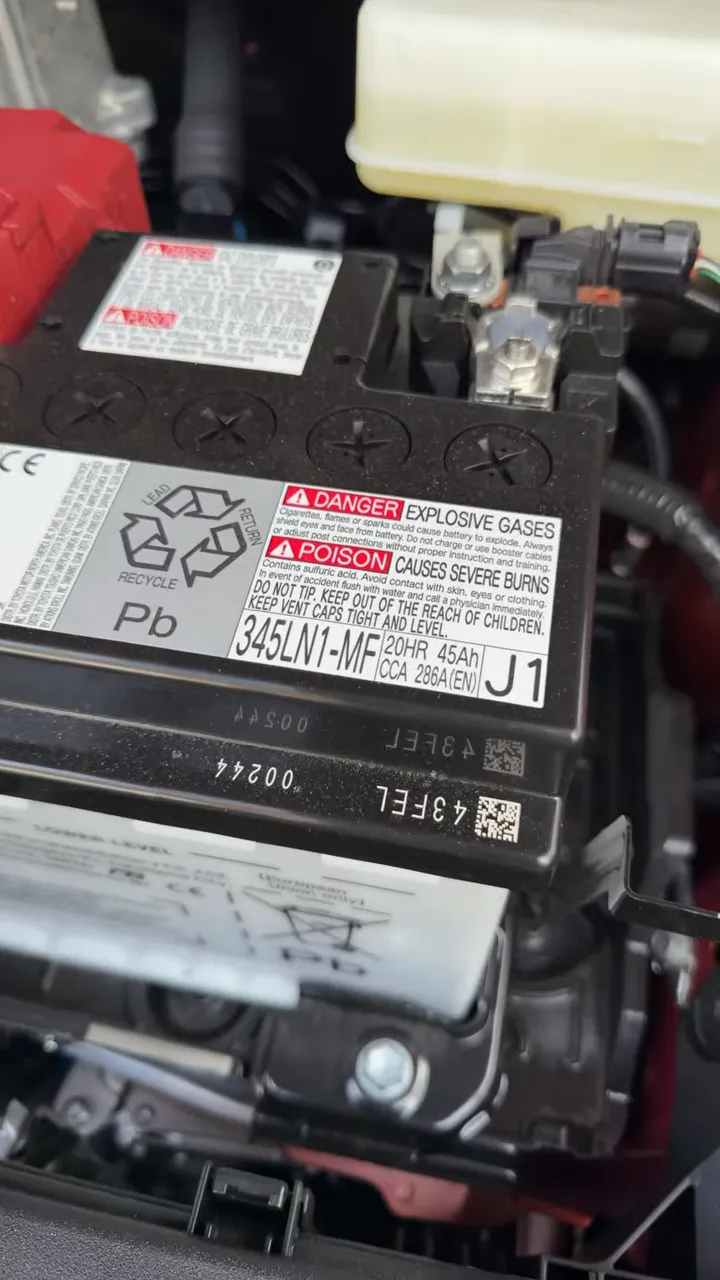
So if the plan is long parking coverage, using the vehicle battery alone is not the route I would recommend. A dash cam battery pack gives you a buffer and helps avoid unnecessary strain on the OEM battery. If you want longer parking mode run time, the IROAD Powerpack Pro 12 battery pack is worth a look for extended recording setups.
The hatch wiring on this C-HR is different than older Toyotas
One of the more interesting parts of this install showed up at the rear hatch. The wiring for the rear camera runs through the hatch boot, and on this particular C-HR build that boot was completely empty. That made it much easier to route the cable through cleanly.
But there is a twist. The way the boot releases is different from many older Toyotas.
On previous Toyota models, you could often pull the boot out because it was basically pressure-fit into place. On this 2026 C-HR EV, there are actual clips that need to be released at the boot and the top section. That feels a lot more Subaru-like than Toyota-like, which lines up with the shared DNA of this vehicle.
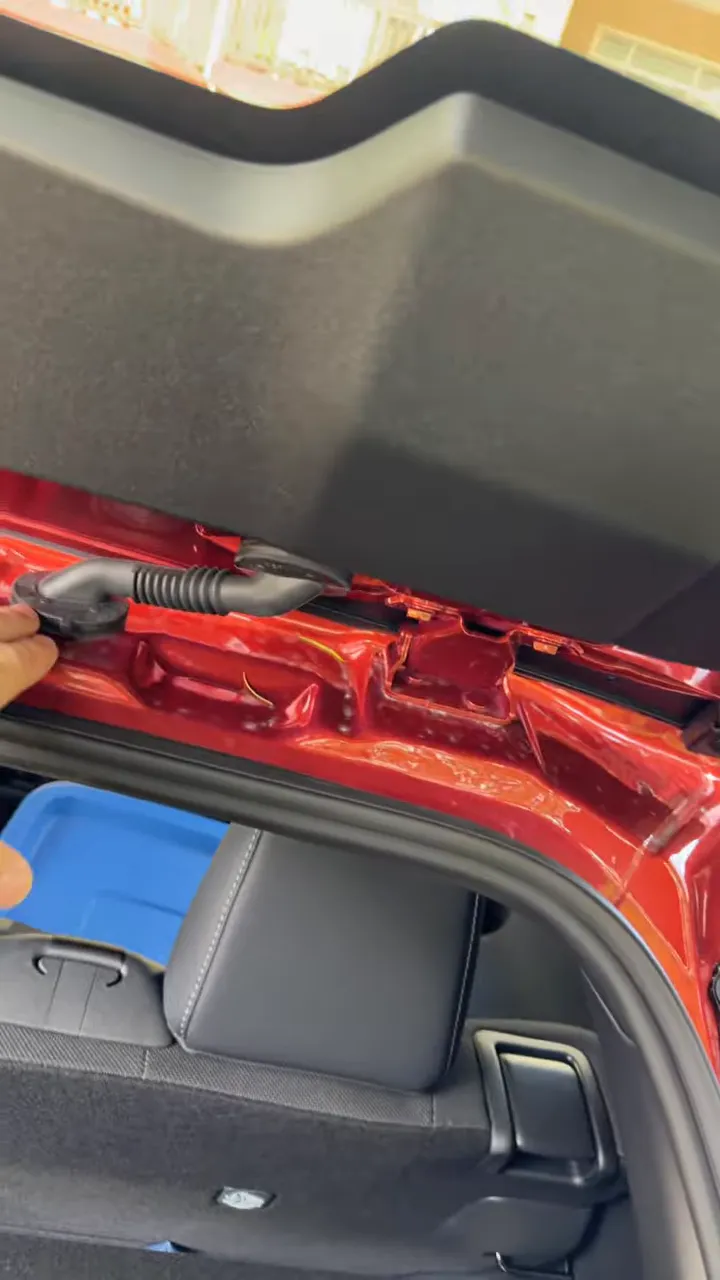
That kind of detail is exactly why newer vehicles can surprise you during installation. Two cars may look similar from the outside, but panel retention, trim clips, and cable routing can be completely different once you get into them.
What this setup gives you day to day
For this 2026 Toyota C-HR EV, the finished setup checks the right boxes:
- Discreet front camera placement that stays out of the driver's way
- Hidden wiring for a factory-style finish
- Rear hatch coverage for incidents behind the vehicle
- Battery pack support for parking mode without overworking the small 12V battery
- Clean cable routing through a hatch design that is a little different than older Toyotas
Final thoughts on the 2026 Toyota C-HR EV dash cam install
This is a solid example of why the vehicle itself should shape the dash cam setup. A newer EV like the 2026 Toyota C-HR is not just another basic install. Camera placement, hatch design, and especially the size of the factory battery all affect the best approach.
In this case, a front and rear Thinkware U3000 Pro paired with an IROAD Power Pack Max 8 makes a lot of sense. You get proper road coverage, cleaner parking protection, and a setup that respects the limitations of the vehicle's small battery.
If you want parking mode, hidden wiring, and a neat OEM-style finish in an EV, this is the kind of setup that gets it done properly.