
What’s New and Exciting in Dash Cameras at SEMA 2025
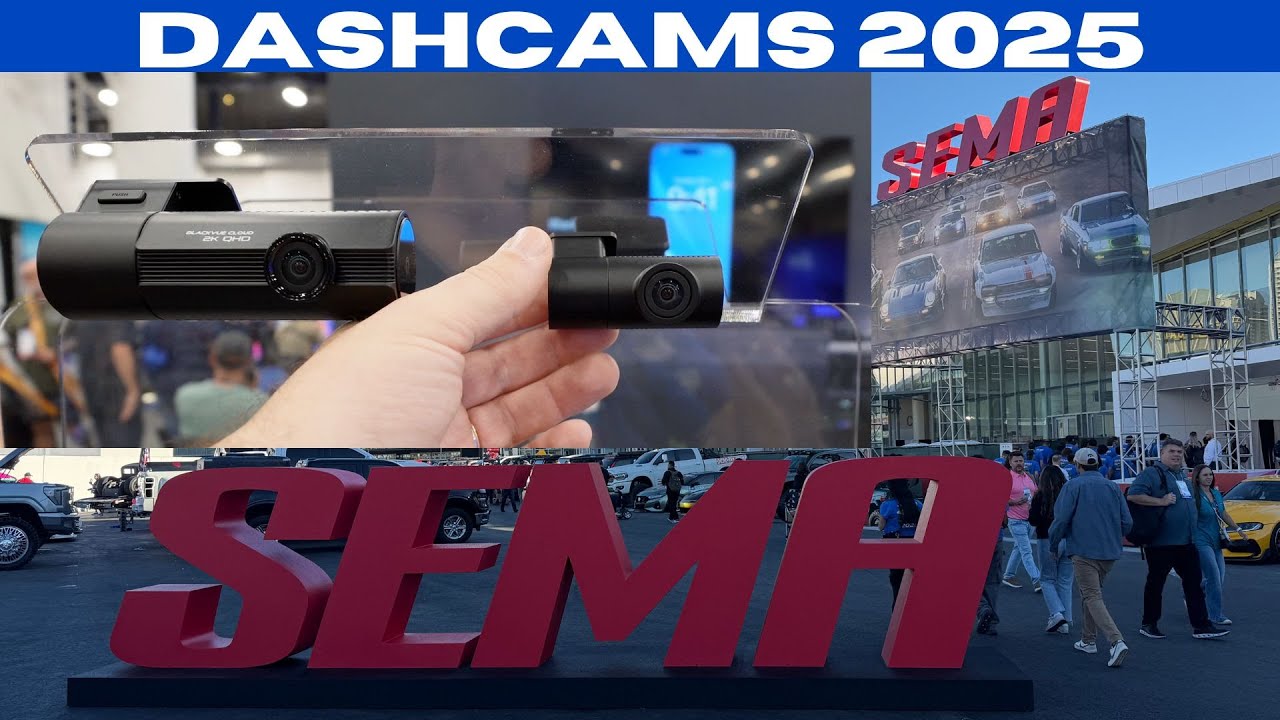
SEMA 2025 showcased a clear trend: dash cameras are no longer simple recorders. Manufacturers are pushing higher resolution sensors, smarter fleet integrations, thermal imaging, and better usability features. Below is a practical roundup of the most interesting dash cam announcements, the features that matter, and what to watch for when choosing a system.
Highlights at a Glance
- Higher-resolution sensors: More 4K front and dual 4K setups using Sony Starvis 2 are appearing across brands.
- Fleet and connected solutions: Built-in cellular, AI incident reporting, and telemetry are moving from niche to mainstream.
- Specialty cameras: Thermal imaging and multi-channel systems aimed at off-road and heavy-duty trucks.
- Usability upgrades: GPS moved into mounts, touch LCDs with heat sinks, and more reliable parking solutions like supercapacitors.
BlackVue: New Elite Series with Starvis 2
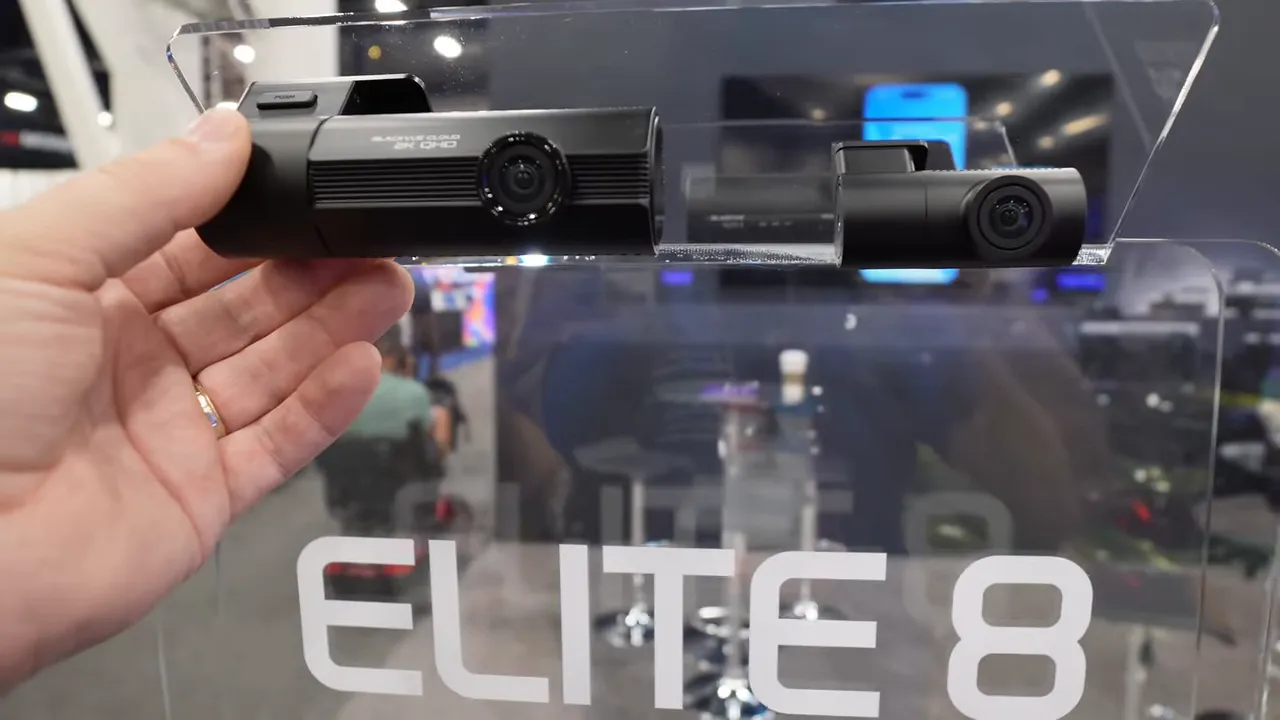
BlackVue unveiled an updated Elite lineup focusing on Starvis 2 sensors. The Elite 8 uses 2K front and rear Starvis 2 units, while the Elite 9 upgrades to a 4K front with a 2K rear. The Elite 10 promises 4K front and rear, though multi-4K stability remains something to validate over time.
Note: LTE connectivity is expected to be an add-on via micro USB rather than an internal module on the showcased units. That means fleets wanting cellular telemetry should confirm availability and integration options before committing.
Connected Fleet Tech (Taiwan Excellence)
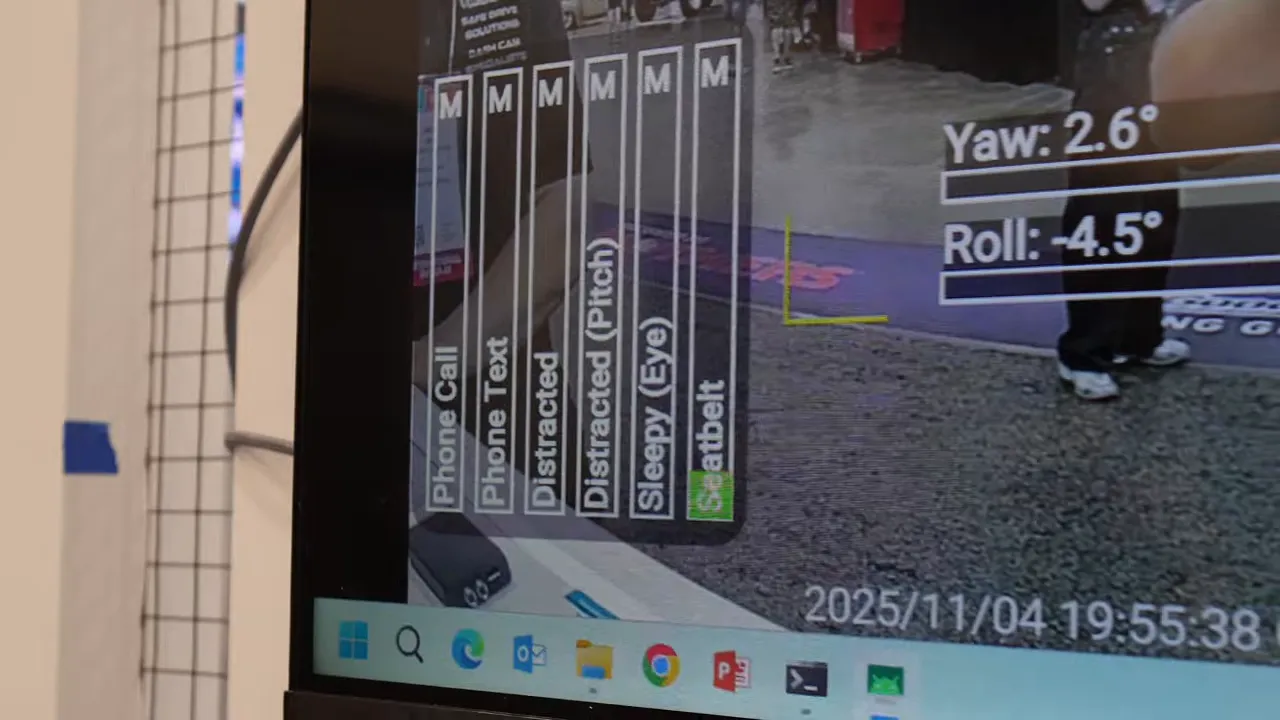
Connected dash camera demos highlighted driver monitoring and distraction detection tied to phone use, seat belt reminders, and sleep/drowsiness alerts. These systems are designed to provide actionable fleet insights, not just video clips. For fleet managers, the ability to detect distracted driving and automatically log incidents can reduce risk and speed up incident review.
Firstech: Small Form Factor Meets Fleet Capability
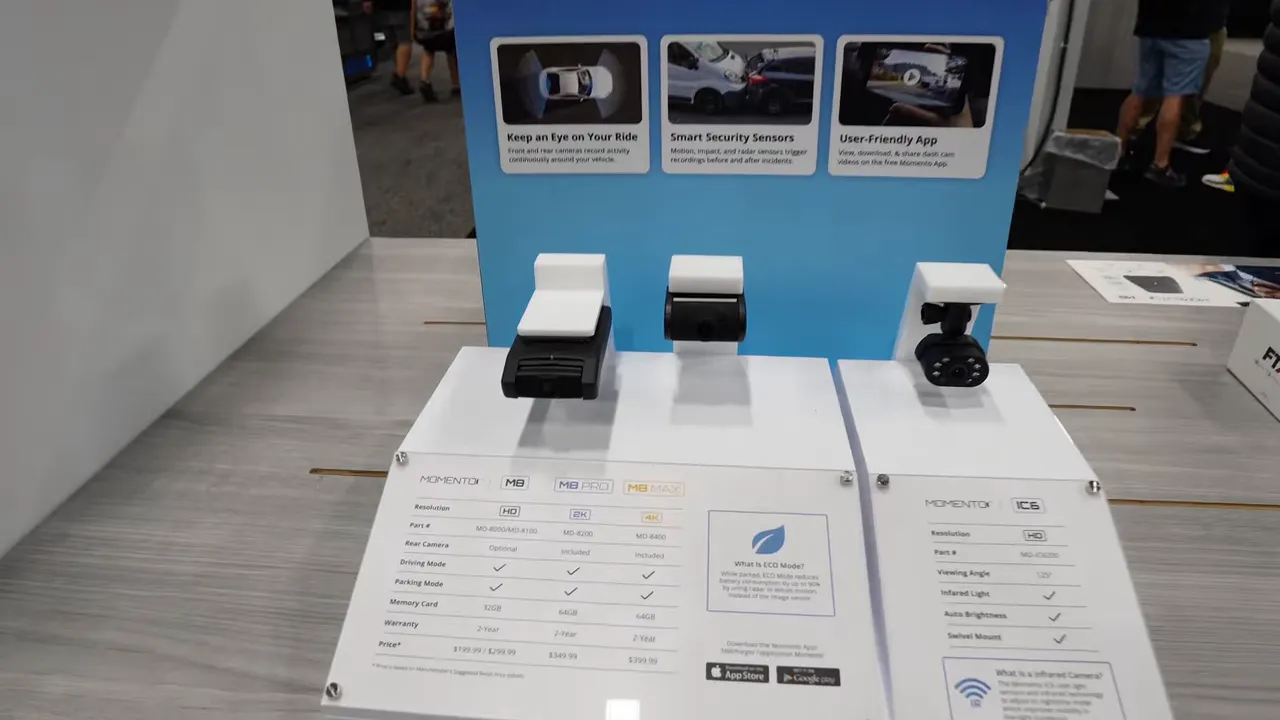
Firstech’s Momento line impressed with compact options that still offer multiple resolution choices (1080p, 2K, 4K). Key features include front radar, optional interior camera support, and a cellular-enabled drone/fleet product for real-time telemetry. This kind of full cellular subscription approach is ideal for fleet tracking and remote evidence upload.
Viofo: New Mini 4K and Established Lineup
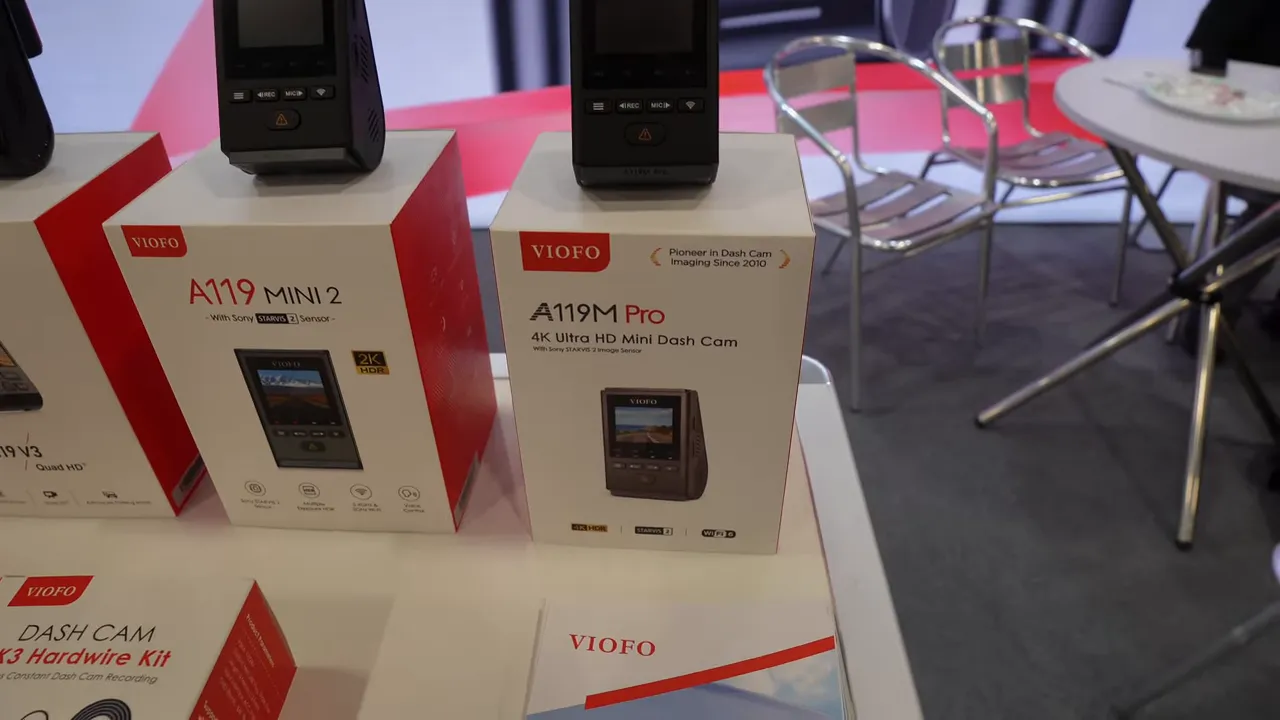
Viofo introduced the A119 M Pro, a 4K mini using the Sony Starvis 2 IMX678. The brand continues to support a broad product family—from mini units to the 4K front/4K rear A229 Ultra and the A329T. Accessories such as polarized lenses and hardwire kits remain part of the ecosystem.
If you are investing in Viofo, expect steady firmware updates and accessory compatibility (HK6, HK5 hardwire kits, battery packs) to be a significant part of the ownership experience.
Vantrue: World’s First Four-Channel Thermal Dash Camera
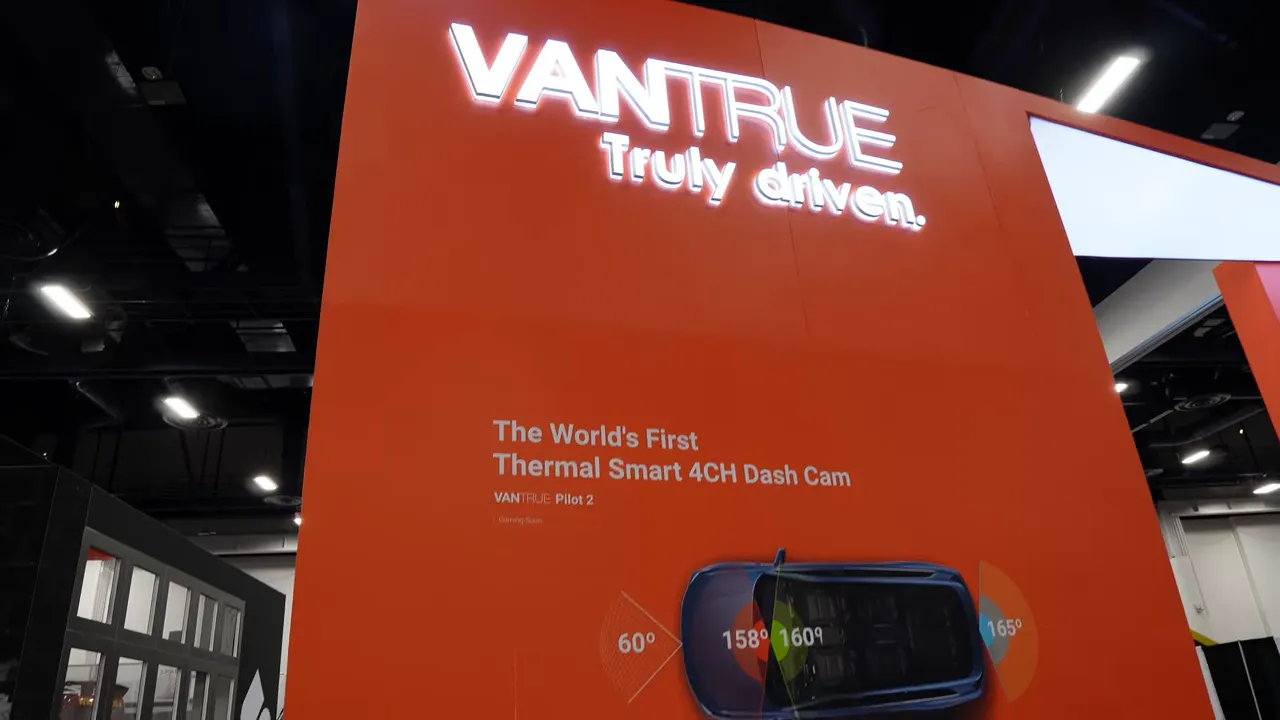
A standout at the show was a four-channel system that includes a thermal camera designed to mount on the hood or license plate area. This setup is useful for off-road users, hunters, and regions with frequent wildlife crossings—thermal picks up animals and humans even in low light or obscured conditions.
The main cabin unit is compact and supports multiple cameras including interior and rear feeds. This product points to a growing market for specialty imaging beyond visible-light 4K captures.
Vantrue: Engagement, Feedback, and Product Roadmaps
Conversations with leadership at Vantrue underscore an important point: feedback matters. Product improvement often depends on internal pipelines and which teams are receiving the feedback. Brands where marketing and R&D have direct access to user insights are better positioned to act on requested improvements.
Thinkware: Practical Upgrades and the ARC 900
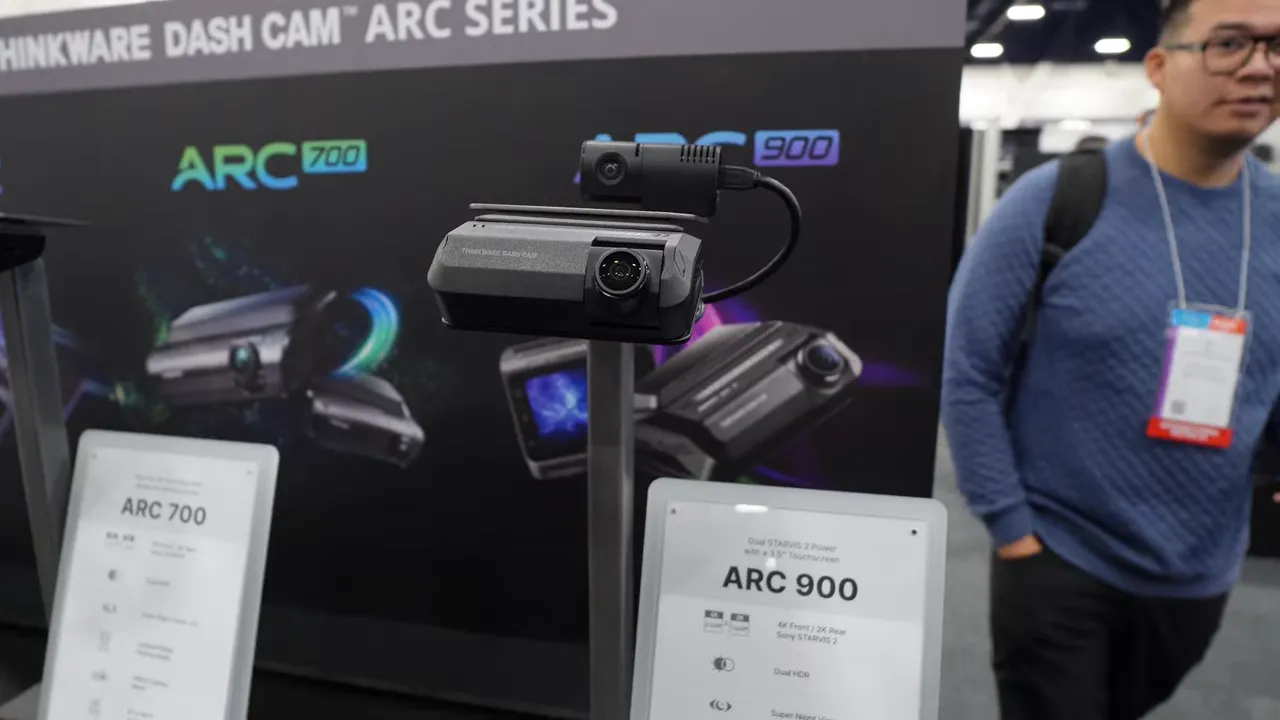
Thinkware continues to refine the user experience. One welcome change is moving the GPS antenna into the mount, eliminating the clutter of an external puck. The newly shown ARK 900 caught attention with an LCD touchscreen, an integrated heat sink between the screen and camera body, and Sony Starvis 2 sensors—4K front and 2K rear. Optional front radar is available as an add-on.
These design choices show a focus on reliability and thermal management—important for long-term reliability in hot dashboards.
Vueroid: Expanding Capabilities for Consumers and Fleets
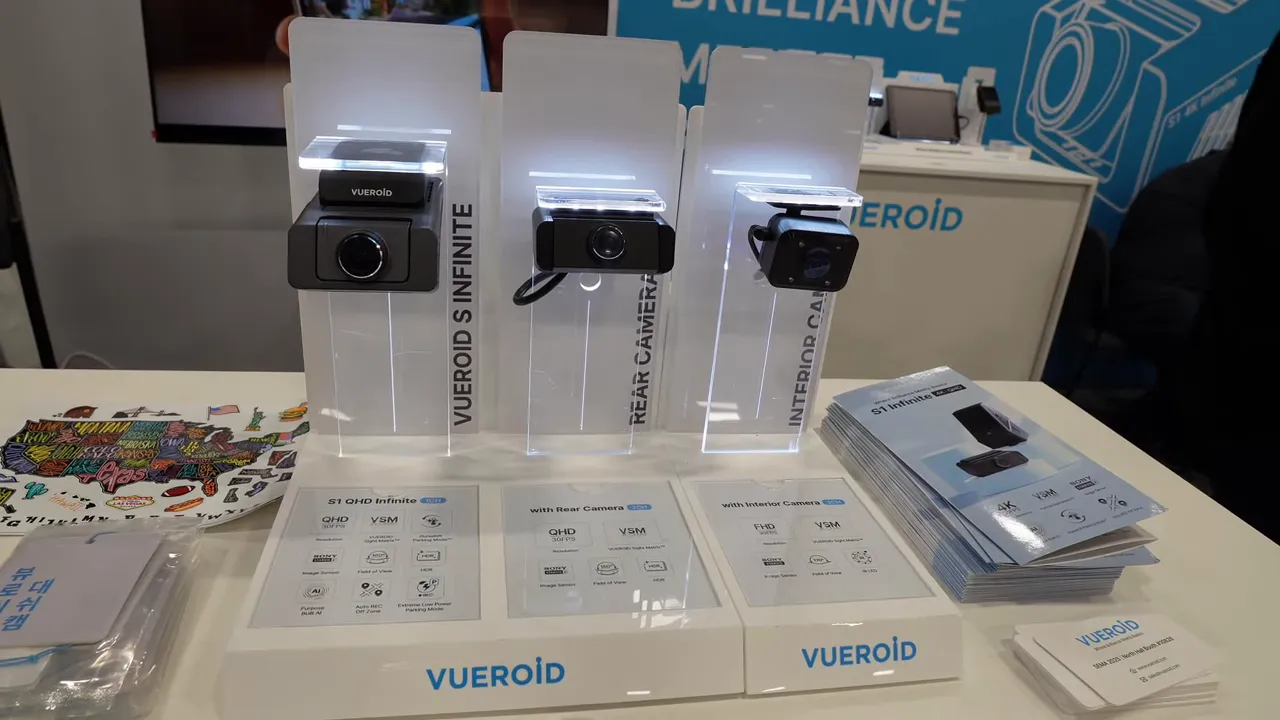
Vueroid displayed multiple series (D20, D21 4K, D40Q2) and an LTE-enabled D21 option. The new S1 model is already available through online retailers in some regions and combines high-end features for power users. Vueroid also demonstrated a multi-camera CV system aimed at heavy-duty trucks to eliminate blind spots—useful for logistics and fleet safety.
Fine Vu: Korean-Made Quality and Bluetooth Pairing
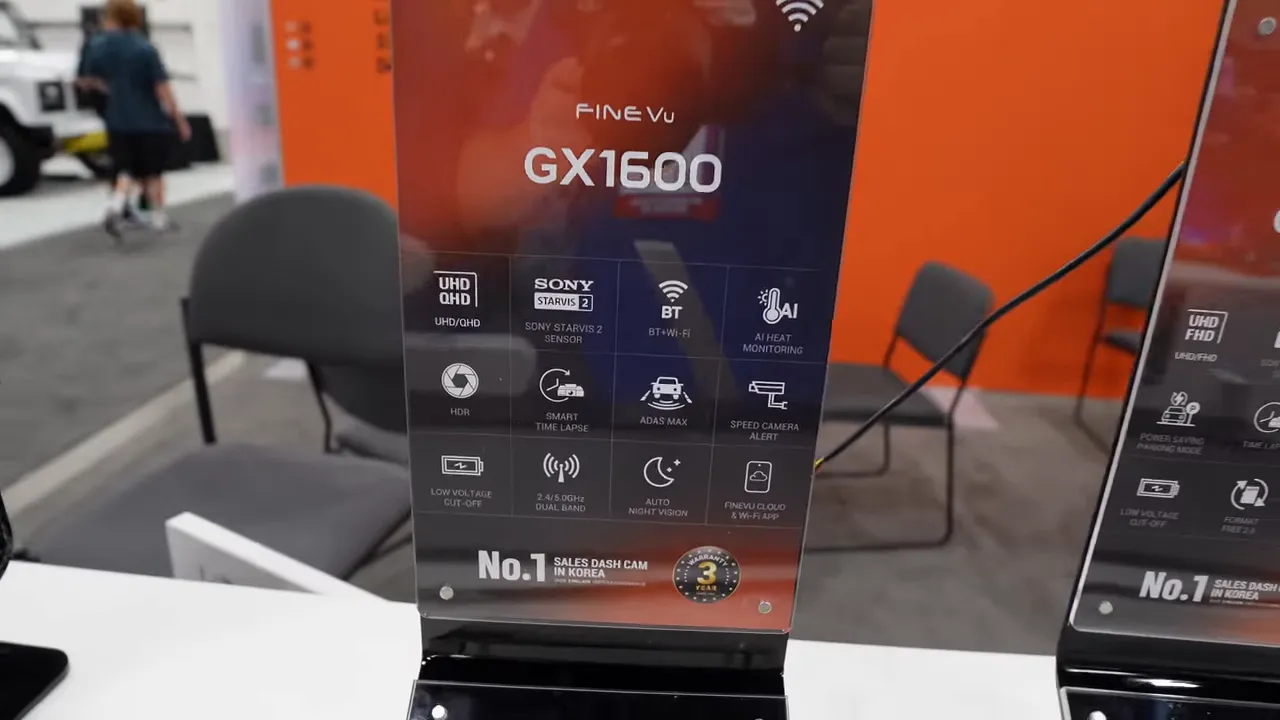
Fine Vu’s GX1600 stands out as a Korean-made option with a 4K front Starvis 2 sensor and 2K rear. The company has added Bluetooth and Wi-Fi smartphone pairing for improved connectivity. For buyers who want a regionally manufactured product, Fine View is worth watching.
Red Tiger and Wolfbox: Diversifying Beyond Dash Cameras
Both brands showcased current dash camera lines but also a broader push into consumer electronics—portable power, inflators, and accessory gadgets. This diversification is similar to how some large Chinese tech companies began spreading across product categories. For customers focused on purely dash-cam-specific innovation, it’s worth monitoring whether these brands retain focus on core camera reliability and firmware support.
Pioneer: Fleet AI Reporting and Compact 4K Options
Pioneer’s fleet solution includes an internal SIM slot, a driver-facing display, and automated AI-generated incident reports that include GPS coordinates and video upload. Initially available in Japan, this kind of smart incident reporting will likely expand globally as fleets demand faster, clearer post-incident workflows.
Pioneer also introduced compact consumer models like the VREC Z820 (4K front, 1080p rear) and small form-factor devices that minimize dashboard footprint. Parking mode is supported with a three-wire cable, although the cutoff voltage of 11.8V could be improved for better battery longevity.
70mai: Moving Upmarket with Feedback-Focused Development
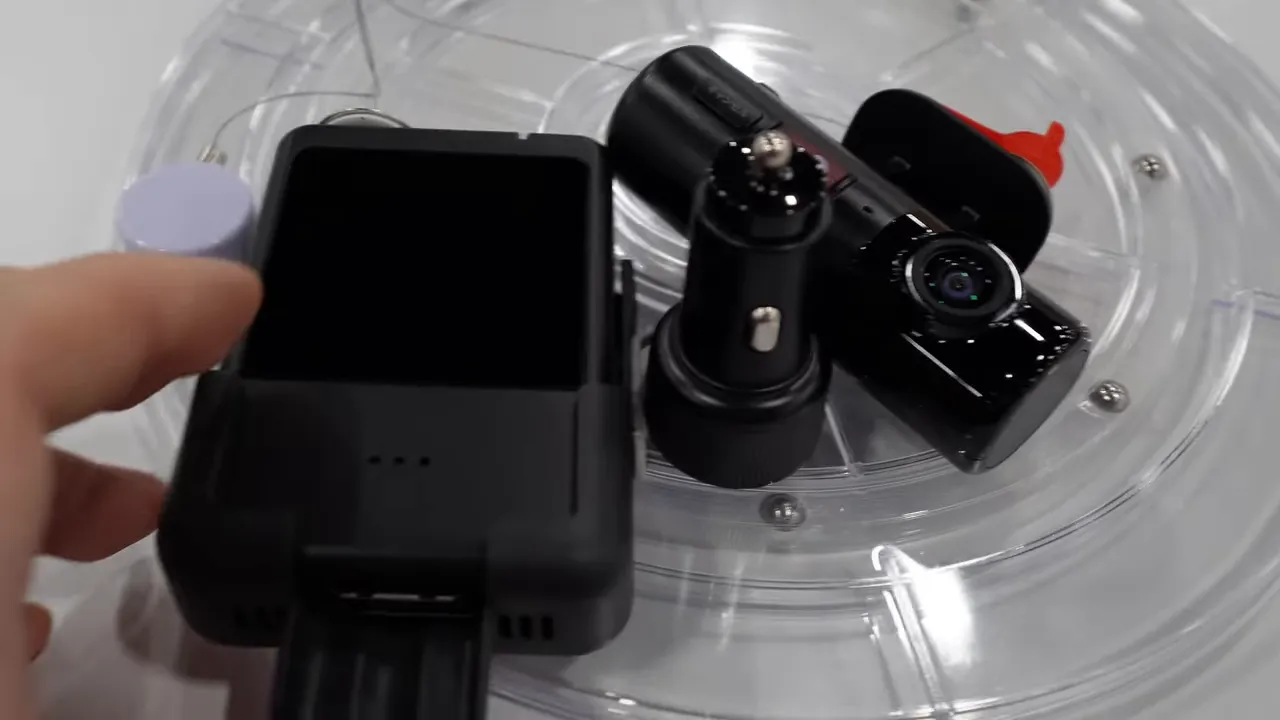
70mai is targeting the higher-end dash cam space and introducing products with Starvis 2 sensors. One notable area of concern: motion detection in some models only works on the front camera. For a premium multi-channel product, motion detection should operate across all cameras unless constrained by power management. Brands moving into the premium tier will need firmware optimizations to reduce current draw while maintaining full motion detection functionality.
Trends and Practical Takeaways
- Starvis 2 is becoming standard: Expect better low-light performance across many mid- and high-end models.
- 4K front and dual 4K setups: Higher resolution offers better plate legibility but requires more processing power and storage. Verify stability for simultaneous 4K recording.
- Fleet features matter: Cellular uploads, AI incident reports, and telemetry are no longer luxuries for commercial operations.
- Parking power strategies: Supercapacitors, three-wire hardwire kits, and smart voltage cutoffs are key. Look for units that support configurable cutoff voltages to protect vehicle batteries.
- Specialty imaging: Thermal cameras and multi-camera heavy-duty systems expand the use cases beyond passenger vehicles.
Choosing the Right Dash Camera for Your Needs
Decide first whether the camera is for a personal vehicle, a high-end commuter car, or fleet use. For personal use, prioritize image quality, parking mode reliability, and smartphone pairing. For fleets, cellular connectivity, automated incident reporting, and robust remote management capabilities should top the list.
When comparing models, check these specifications:
- Sensor type (Sony Starvis 2 vs earlier generations)
- Resolution (4K vs 2K vs 1080p) and whether front and rear are the same
- Connectivity options (LTE/4G add-on vs built-in)
- Parking mode strategy (battery cutoff, supercapacitor, current draw)
- Software and firmware update cadence
Final Thoughts
SEMA 2025 demonstrated that dash cameras are evolving into smarter, more capable tools. Whether it is better sensors, thermal imaging, or fleet-focused AI, the industry is moving quickly. Prioritize reliability and long-term support when selecting a product, and consider how a camera will integrate with your vehicle or fleet management workflow.
For anyone installing or buying a dash camera, focus on dependable parking mode behavior, clear low-light performance, and a vendor that listens to feedback and provides timely firmware updates.