
2026 Porsche Cayenne Electric Dash Camera and Battery Pack Installation
A clean dash camera installation should give you front and rear coverage without getting in the way of driving or taking over the cargo area. On this brand-new 2026 Porsche Cayenne Electric, we installed a VUEROID S1 4K front and rear dash camera system with a dedicated battery pack.
The priorities were straightforward: keep the front camera out of the driver’s way, hide the battery pack beneath the cargo floor, and provide reserve power for recording while parked without relying on the vehicle’s battery.
Front Camera Placement That Keeps the Driver in Mind
We mounted the front dash camera off to the passenger side of the windshield. That keeps it away from the driver’s immediate line of sight and makes the installation less distracting during everyday driving.
Camera placement matters just as much as the equipment itself. The goal is to add recording coverage without making the camera a focal point inside the cabin.
A Dedicated Battery Pack Hidden Beneath the Cargo Floor
We also installed a separate dash cam battery pack so the customer has reserve power while parked. The reason for adding it is simple: the customer should not have to worry about the dash camera draining the vehicle’s battery during parked recording.
In this Cayenne, we mounted the pack completely beneath the rear cargo subfloor. It stays out of sight rather than occupying the main luggage area.
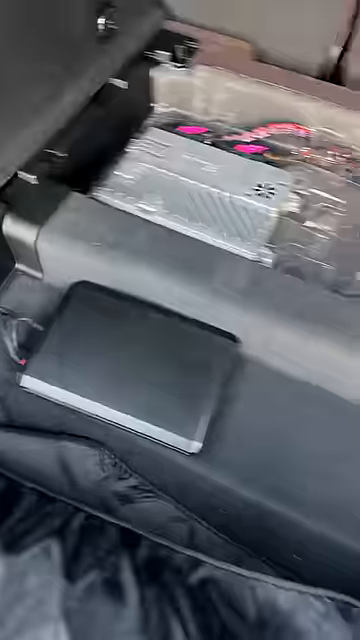
This vehicle has the Burmeister sound system, and its amplifier is also located beneath the subfloor. That existing equipment was an important part of planning where the additional battery pack would fit.
Power Connections at the Rear and Front
With the battery location established, we used the available connection points in the vehicle:
- Ground: We connected the battery pack’s ground at an existing vehicle ground point beneath the rear subfloor.
- Constant power: The fuse box in the rear driver-side corner had spare positions available. We used a spare fuse position for the constant-power connection rather than tapping into an occupied circuit.
- Ignition: We ran the ignition connection to the front of the vehicle.
Using the available spare fuse position meant we did not have to tap into an existing vehicle circuit for that connection. These are the connection locations used on this particular installation, not a universal fuse-location guide. For vehicle-specific documentation, refer to Porsche’s official owner’s manuals.
Rear Camera Routing Through the Hatch Grommets
The rear camera is mounted on the hatch, with its cable routed through the existing hatch wiring grommets.
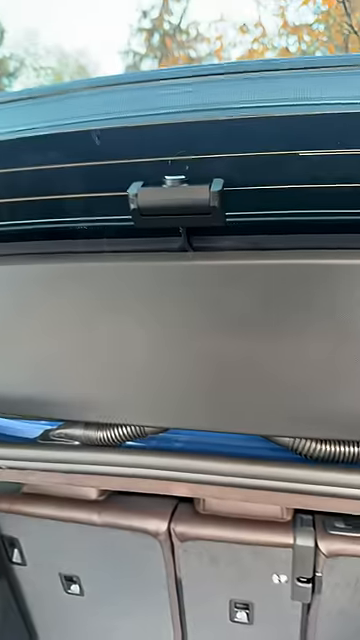
The grommet clips are the detail that needs particular care. These fittings have specific release tabs. They cannot simply be pried loose from whichever side is easiest to reach.
On the grommets in this installation, we identified the side release point on one fitting and the upper release point on the other. Applying force from the wrong side can break the retaining clip, leaving the fitting needing replacement.
That small detail makes a big difference to the finished job. Routing the cable through the existing grommets is only part of the work. Releasing those fittings without damaging them is just as important.
The finished setup gives this Cayenne front and rear dash camera coverage, dedicated reserve power for parked recording, and a battery pack hidden beneath the cargo floor. Up front, the camera stays over to the passenger side. At the back, the cable follows the hatch’s existing wiring route. It is a practical installation that keeps the added equipment discreet.