
Airbag safety - Running wires by the B pillar
Introduction
We recently inspected a Toyota vehicle with a deployed airbags and wanted to share what we found about running dash cam wiring near the B-pillar. There's a lot of debate about whether tucking a wire behind the B-pillar could interfere with airbag deployment. In this post we'll show what we observed, explain why the concerns exist, and describe the safe wiring practices we follow when installing dash cams.
Quick note: If you want a professional installation or to learn more about how we install dash cams safely, check our installation pages: https://safedrivesolutions.com/pages/dash-cam-installation and request a quote at https://safedrivesolutions.com/pages/dash-cam-quote.
What we saw in the Toyota (the reality behind the worry)
When we inspected the vehicle, the key thing we noticed was the actual deployment path of the side airbag relative to the B-pillar. As we explained in the inspection:
"This is a Toyota vehicle with a blown airbag. ... This is the B-pillar. So, this is where your seat belt goes for your front seat on your vehicle. And as you can see right here, the airbag is in front of this B-pillar."
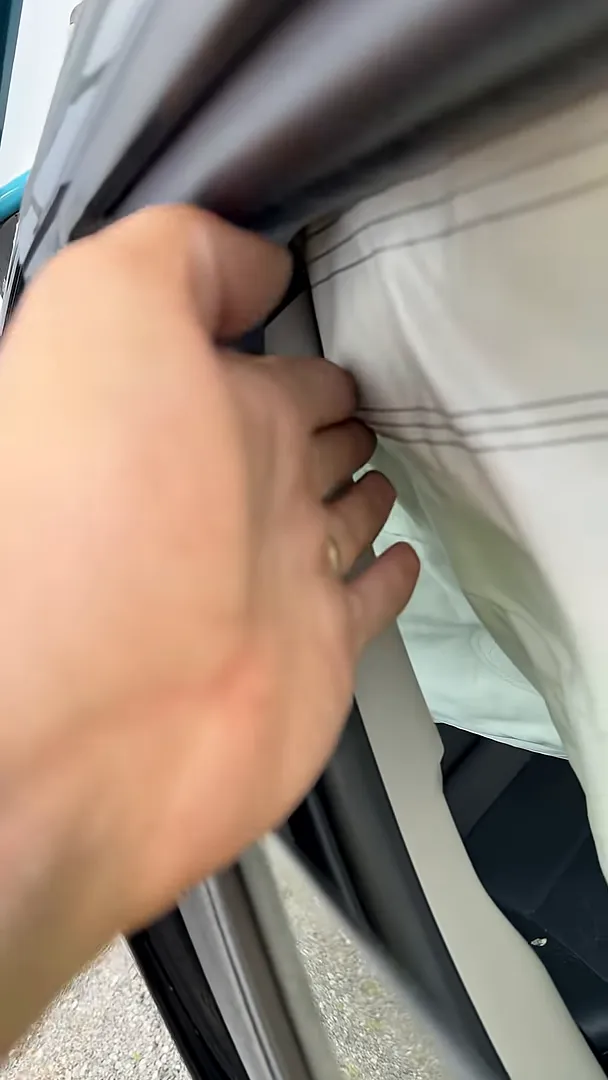
Put simply: the side airbag deploys from the roof/upper trim area and travels down in front of the B-pillar, not behind it. That means wires tucked into the rear-facing side of the B-pillar (behind the trim) are generally not in the direct path of the airbag when it inflates.
"But as you can see, clear as day, this comes down right in front of it because it's up top in the roof here."
Why people worry about wiring and airbags
Concerns come from a few understandable places:
- Fear that any foreign object could obstruct an airbag or alter its deployment.
- Uncertainty about newer vehicle designs — manufacturers keep changing airbag location and curtain routing.
- Hearing anecdotes that a wire or trim piece might get caught during deployment.
Those worries are valid, which is why we investigate and document real-world examples rather than rely on assumptions.
How we run dash cam wiring safely (best practices)
From our inspections and installations, here are practical steps we take to minimize any risk and keep installations neat and safe:
- Route wiring along factory trim seams and behind panels, avoiding placement on the forward-facing surface of any airbag module.
- Keep wiring tucked into the rear-facing side of the B-pillar when possible, since curtain airbags deploy in front of that area.
- Secure wires gently using existing clips or adhesive-mounted clips — never staple or puncture near airbag modules.
- Avoid running wires across or directly over airbag covers or where labeling indicates an airbag location.
- When in doubt, consult the vehicle’s service manual or rely on a trained professional installer familiar with that make/model.
We always aim to run dash cam wiring in the safest way possible while maintaining a clean, factory-like finish.
Tools and accessories we recommend
- Hardwire kits designed for dash cams (for example, see our hardwire options and compatible accessories at https://safedrivesolutions.com/collections/dash-cam-battery-pack and https://safedrivesolutions.com/products/viofo-hk4-hardwire-kit).
- Quality trim tools to avoid damaging panels during wire routing — professional installers use plastic pry tools rather than metal ones.
- Reliable dash cams and accessories from trusted brands — browse our dash cam selection at https://safedrivesolutions.com/collections/shop-dash-cam and product pages like https://safedrivesolutions.com/products/viofo-a229-pro-4k-front-rear.
What we're doing next
We plan to continue locating and inspecting more vehicles with deployed airbags to confirm whether our wiring techniques remain safe across different makes and model years. Our goal is to identify any rare exceptions and adapt our methods as vehicle designs evolve.
"We're going to continue trying to find more and more vehicles with blown airbags. That way, we can find out and see if there is a possibility that maybe we are doing something wrong on some of these newer vehicles."
Resources and further reading
Want to learn more about dash cam installation, wiring, and safety? Here are a few helpful pages from our site:
- General dash cam installation info: https://safedrivesolutions.com/pages/dash-cam-installation
- Why professionally installed dash cams matter: https://safedrivesolutions.com/blogs/resources/get-your-dash-cam-professionally-installed
- Specific article on wiring near airbags: https://safedrivesolutions.com/blogs/resources/dashcam-wiring-by-airbags-in-a-vehicle
- Toyota-specific installation considerations: https://safedrivesolutions.com/pages/toyota and https://safedrivesolutions.com/blogs/resources/dash-cam-install-toyota-rav-4
- Request a custom installation quote: https://safedrivesolutions.com/pages/dash-cam-quote
Conclusion
From what we've observed in this Toyota and from our installation experience, tucking dash cam wiring behind the B-pillar (on the rear-facing side) is not in the curtain airbag’s deployment path. That said, every vehicle is different. We continue to inspect deployed airbags and refine our practices. If you have any concerns about wiring near airbags in your vehicle, contact a professional installer or reach out to us for advice and a safe, clean installation.
Learn more about our services and products: https://safedrivesolutions.com/